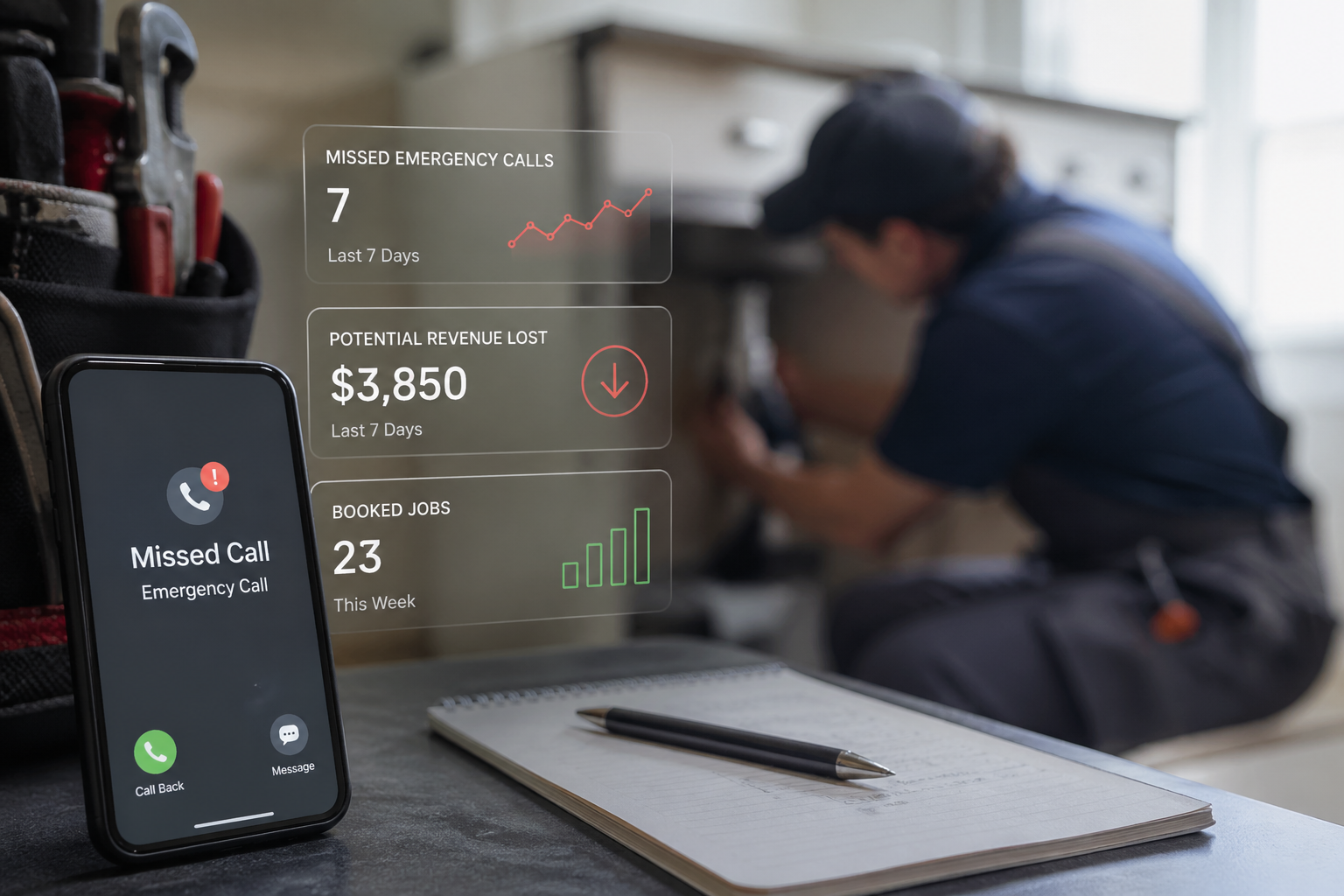
Is your title company's phone system creating bottlenecks in your closing process? The average real estate closing involves coordination between 8-12 parties and requires 200+ phone interactions. When buyers, sellers, agents, lenders, and attorneys can't reach your team immediately, closings get delayed—and delayed closings cost everyone money.
Title companies face a unique communication challenge. Unlike most businesses that handle simple appointment scheduling, your team manages complex, time-sensitive transactions with strict deadlines and regulatory requirements. A single missed call from a lender at 4:47 PM on Friday could delay a closing by an entire week, costing your company thousands in extended liability and damaging relationships with real estate agents who drive your referral business.
The traditional solution—hiring more front desk staff—doesn't solve the fundamental problem. During peak hours (typically 10 AM-2 PM when agents are most active), even a fully-staffed office gets overwhelmed. After 5 PM and on weekends, when urgent issues frequently arise, your phones go unanswered. The result? An estimated 35-40% of incoming calls to title companies go to voicemail, creating frustration and inefficiency throughout the closing process.
The Real Cost of Communication Chaos in Title Operations
Title company operations are inherently phone-intensive, yet most firms treat phone management as an afterthought. Let's quantify what inefficient phone handling actually costs your business.
Direct Revenue Impact: Every delayed closing represents immediate lost revenue. If your company closes 50 transactions monthly with an average fee of $1,200, and poor communication delays just 15% of those closings by one week, you're losing $9,000 in monthly cash flow. Over a year, that's $108,000 in delayed revenue—money that could be reinvested in growth.
Operational Efficiency Losses: Your licensed title officers didn't spend years building expertise to answer basic status inquiries. Yet industry data shows title professionals spend an average of 8-12 hours weekly on repetitive phone calls that could be automated. At a fully-loaded cost of $75 per hour, that's $600-$900 per employee weekly in misallocated labor—time that should be spent reviewing commitments, clearing title issues, and ensuring compliance.
Relationship Damage: Real estate agents drive 78% of title company business through referrals. When an agent calls three times without reaching anyone, they remember. In a competitive market where agents have 5-10 title companies to choose from, exceptional responsiveness becomes your competitive advantage. One lost agent relationship—typically worth $45,000-$65,000 annually in repeat business—far exceeds the cost of solving your phone problem.
Compliance and Error Risks: Miscommunication during closings creates liability exposure. When important information gets lost in phone tag, critical details get missed. Document delivery confirmations, wire transfer verifications, and deadline communications require bulletproof documentation. Manual phone systems create gaps that compliance officers lose sleep over.
How AI Phone Systems Transform Title Company Operations
Modern AI phone automation isn't just a better answering service—it's a comprehensive coordination platform designed specifically for complex, deadline-driven transactions like real estate closings.
Intelligent Call Routing Based on Transaction Context: Unlike traditional phone trees that frustrate callers, AI systems understand context. When a mortgage broker calls about the Johnson closing scheduled for Friday, the system instantly identifies the transaction, knows which title officer is assigned, understands where in the process this closing stands, and routes appropriately. If your title officer is on another call, the AI can provide real-time status updates, confirm that all lender requirements are met, or schedule a callback at a specific time.
This contextual intelligence eliminates the "let me transfer you" runaround that wastes everyone's time. The AI accesses your closing software in real-time, pulling current status information and providing accurate answers without human intervention for 70-80% of routine inquiries.
24/7 Closing Coordination That Never Sleeps: Real estate transactions don't respect business hours. Agents often work evenings and weekends, and buyers frequently have urgent questions outside traditional office hours. An AI receptionist for title companies handles these after-hours communications seamlessly.
When a buyer calls at 7 PM worried about their closing the next morning, the AI can confirm the closing time and location, verify what documents to bring, provide wiring instructions securely, and even schedule an early morning call with their title officer if needed. This after-hours capability captures communications that would otherwise be lost and reduces the anxiety that leads to last-minute problems.
Automated Document Delivery and Confirmation: The closing process involves constant document exchange—title commitments, surveys, HOA documents, loan packages, and settlement statements. AI phone systems integrate with your document management platform to automate delivery confirmation. When someone calls asking if you received their executed contract, the AI can verify receipt instantly by checking your system. When you need to confirm a party received critical closing documents, the AI can make outbound calls to verify receipt and document the confirmation.
Multilingual Support for Diverse Markets: In major metropolitan markets, 30-40% of real estate transactions involve parties who prefer languages other than English. AI phone systems with multilingual capabilities can communicate fluently in Spanish, Mandarin, Vietnamese, and dozens of other languages—without hiring multilingual staff. This expands your addressable market and ensures clear communication with all closing parties, reducing misunderstandings that delay closings.
Real Results: Title Companies Using AI Phone Automation
Precision Title & Escrow - Houston, TX was drowning in phone calls. As a mid-sized operation closing 120 transactions monthly, their three-person front desk couldn't keep up during peak periods. They were missing an estimated 45 calls daily during busy weeks.
After implementing Dialiq's AI phone system, results were dramatic. Call answer rate jumped from 62% to 97% within the first month. Average time to respond to inquiries dropped from 3.2 hours to 8 minutes. Most significantly, their average closing timeline decreased from 28 days to 22 days—a 21% improvement driven primarily by faster communication and fewer delays waiting for information.
The ROI was undeniable. The AI phone system costs them $699 monthly. In return, they handle 6 additional closings per month (at $1,200 average revenue) purely from better lead capture and faster processing. That's $7,200 in additional monthly revenue, delivering an 930% return on investment. Owner Marcus Chen notes: "We thought we needed to hire two more people. Instead, we deployed AI and got better results for a fraction of the cost."
Commonwealth Title Services - Boston, MA operates in one of the nation's most complex title markets. They needed a solution that could handle sophisticated inquiries about Massachusetts-specific title issues while managing basic coordination for 200+ monthly closings.
Their Dialiq AI system was trained on common Massachusetts title scenarios and integrated with their Qualia closing software. Now when attorneys call with questions about title defects, the AI can pull the specific property file, identify recorded issues, and explain current resolution status—or immediately route complex matters to the appropriate title attorney.
Results after six months: 89% of routine status calls handled without human intervention, title attorney phone time reduced by 11 hours weekly (allowing them to handle more complex clearance work), and agent satisfaction scores improved by 34 points. Managing partner Jennifer Walsh reports: "Our title attorneys now spend their time on actual title work instead of playing phone tag. It's allowed us to grow capacity without growing overhead."
Implementing AI Phone Coordination: What Title Companies Need to Know
Many title company owners hesitate to adopt AI phone systems, worried about complexity or disruption. The reality is far simpler than most expect.
Integration with Existing Systems: Modern AI phone platforms integrate seamlessly with popular title production software including Qualia, RamQuest, ResWare, SoftPro, and SnapClose. The integration typically takes 1-2 hours and doesn't require IT expertise. Once connected, the AI can access transaction data in real-time, providing accurate status information without manual updates.
For document management, integration with systems like DocuSign, Dropbox, and SharePoint allows the AI to confirm document receipt and delivery automatically. Wire transfer confirmations can integrate with secure payment platforms to provide verification without exposing sensitive information.
Training the AI on Your Processes: Every title company has unique workflows, terminology, and policies. The setup process involves training your AI receptionist on how you operate. This includes your specific closing procedures, common questions your team fields, escalation protocols for urgent issues, and the personalities of your closing coordinators and title officers.
The training process takes 2-3 hours initially and uses actual recorded calls (with permission) to help the AI understand your communication style. Most title companies are fully operational within 48 hours of implementation, with the AI handling routine calls while more complex matters still route to your team.
Cost Structure and ROI Timeline: AI phone systems for title companies typically run $99-$699 monthly depending on call volume and required integrations. For context, hiring a full-time receptionist costs $35,000-$45,000 annually plus benefits—at least $3,500 monthly. Even the most robust AI solution costs less than 20% of a single full-time employee while providing 24/7 coverage and handling unlimited simultaneous calls.
Most title companies see positive ROI within 30-45 days through a combination of captured leads (calls that previously went to voicemail), time savings for licensed staff, and faster closing timelines. The average title company closing 60+ transactions monthly sees $8,000-$15,000 in monthly value from AI phone automation.
Addressing Common Concerns About AI in Title Operations
"Our closings are too complex for AI to handle" - This is the most common objection, and it's based on a misunderstanding of how modern AI phone systems work. The AI isn't replacing your title officers or closing coordinators—it's handling the 70-80% of calls that are routine status checks, document confirmations, and appointment scheduling. Complex title issues, unusual circumstances, and sensitive conversations still route to your experienced team. The difference is your team now focuses exclusively on these high-value interactions instead of being interrupted constantly by routine inquiries.
"What about data security and compliance?" - Title companies handle sensitive financial and personal information, making security paramount. Enterprise AI phone systems are built with compliance in mind, offering SOC 2 Type II certification, end-to-end encryption for all communications, and secure integration protocols that never expose sensitive data unnecessarily. Many AI platforms are specifically designed for regulated industries and include built-in compliance features like automatic call recording, audit trails, and secure data handling that actually improve your compliance posture compared to traditional phone systems.
"Will real estate agents accept talking to AI?" - Initial testing shows agents overwhelmingly prefer getting immediate, accurate answers from AI over waiting in phone queues or leaving voicemails. When an agent calls at 4:55 PM and needs to know if title work is complete for tomorrow's closing, they care about getting a fast, accurate answer—not whether it comes from a person or AI. Post-call surveys show 92% of real estate agents rate their AI-assisted interactions as "good" or "excellent," with many specifically noting appreciation for immediate response and 24/7 availability.
"What happens when the AI doesn't know the answer?" - Modern AI systems are designed with graceful escalation. When the AI encounters a question outside its knowledge base or detects complexity beyond its capability, it immediately routes to an appropriate team member with full context. The caller experiences this as a warm transfer with no repetition required. Over time, the AI learns from these escalations, gradually expanding its ability to handle increasingly complex inquiries. Most systems reach 80%+ autonomous handling rates within 60-90 days of operation.
The Competitive Advantage of Superior Communication
In an industry where service differentiation is challenging, responsiveness becomes a powerful competitive weapon. Real estate agents work with title companies that make their lives easier—and nothing makes an agent's life easier than immediate, accurate responses to client questions.
Consider the competitive scenario: An agent is working with a first-time homebuyer who's anxious about their closing next week. The buyer has questions about closing costs and required documentation. If the agent calls your competitor and gets voicemail, then calls you and gets immediate answers plus a follow-up email with detailed information, who gets the agent's next referral?
This competitive dynamic compounds over time. As your AI phone system captures more calls, responds faster, and creates better experiences, your agent referral base grows. Meanwhile, competitors using traditional phone systems continue losing calls and frustrating their referral sources. Within 12-18 months, this communication advantage can shift significant market share, especially in competitive suburban markets where agents have numerous title company options.
Beyond Phone Answering: AI as Operational Infrastructure
The most sophisticated title companies are deploying AI phone systems not just for answering calls, but as core operational infrastructure that drives efficiency throughout their business.
Proactive Outreach and Deadline Management: AI systems can make outbound calls to manage closing timelines proactively. Three days before closing, the AI calls all parties to confirm attendance, verify they have wiring instructions, and answer any final questions. This proactive communication reduces last-minute surprises and no-show closings while requiring zero staff time.
Quality Assurance and Training: Every call handled by your AI system is automatically transcribed, analyzed, and categorized. This creates a searchable database of common inquiries, identifies training opportunities for your staff, and provides insight into which closing issues create the most customer confusion. This intelligence helps you continuously improve your operations and customer communications.
Scalability Without Proportional Cost Increase: Traditional title company scaling requires hiring additional staff proportional to volume increases. With AI phone infrastructure, you can double or triple closing volume with minimal increase in phone handling costs. This dramatically improves unit economics and makes growth more profitable. Companies using AI phone systems report 40-60% better margins on incremental volume compared to their traditional cost structure.
Getting Started with AI Phone Coordination
Implementing AI phone automation in your title company doesn't require months of planning or significant technical expertise. The process is straightforward and can be completed in less than a week.
Step 1: Assessment (Day 1) - Analyze your current call volume, identify pain points, and determine which call types consume the most staff time. Most title companies discover that 70-80% of their calls fall into 5-6 categories that are easily automated.
Step 2: Integration Setup (Days 2-3) - Connect the AI phone system to your existing title production software, document management platform, and calendar system. Modern integrations use secure APIs and typically require 1-2 hours of technical setup.
Step 3: AI Training (Days 3-4) - Configure your AI assistant with your specific processes, terminology, and escalation protocols. This includes training the system on common questions, appropriate responses, and when to route calls to specific team members.
Step 4: Testing and Refinement (Days 5-6) - Run parallel systems temporarily, allowing the AI to handle calls while your team monitors performance and identifies refinement opportunities. This testing phase ensures quality before full deployment.
Step 5: Full Deployment (Day 7+) - Launch the AI phone system as your primary call handler. Continue monitoring and refining over the first 30 days as the system learns from actual call patterns and feedback.
Most title companies reach optimal performance within 30-45 days, at which point the AI is handling 75-85% of incoming calls autonomously while complex matters route seamlessly to appropriate team members.
Transform Your Title Company's Communication Today
Every day you operate with a traditional phone system, you're losing calls, frustrating referral partners, and watching your licensed staff spend valuable time on routine inquiries. The title companies that dominate their markets over the next 5-10 years will be those that embrace AI-powered efficiency while maintaining the personal relationships that drive the business.