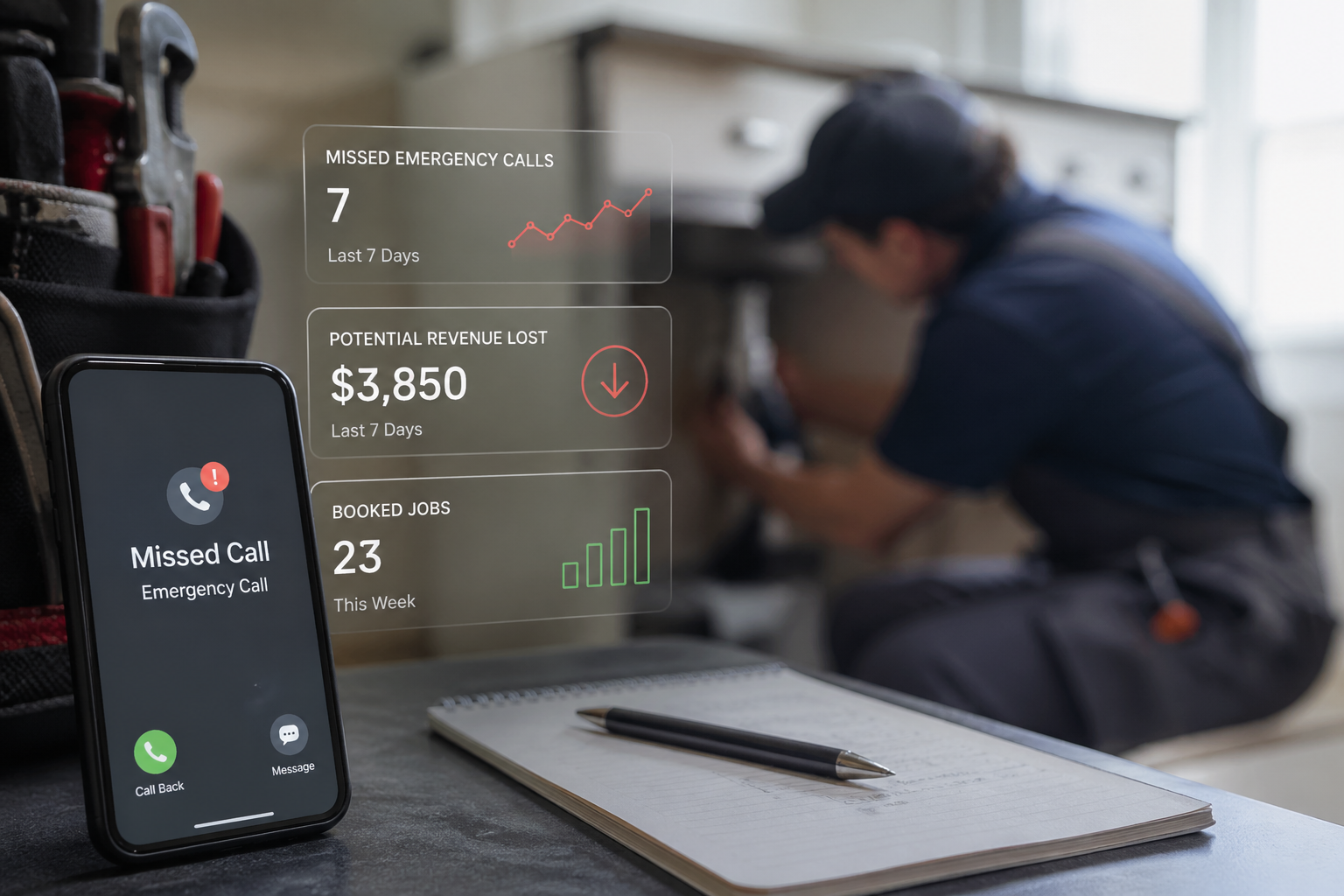
Missing customer calls is costing your business more than you think. Studies show that 67% of callers who can't reach a business on the first try won't call back—they'll simply move on to a competitor. For small and medium-sized businesses, every missed call represents lost revenue, frustrated customers, and opportunities handed to competitors on a silver platter.
The solution? AI call handling services have evolved from experimental technology to essential business tools that can answer every call, qualify leads, book appointments, and provide customer support 24/7—without the cost of hiring a full-time receptionist.
This comprehensive guide will walk you through everything you need to know about choosing the right AI call handling service for your SMB in 2025, including pricing comparisons, essential features, and real-world results from businesses like yours.
What is an AI Call Handling Service?
An AI call handling service uses artificial intelligence and natural language processing to answer and manage phone calls automatically. Unlike traditional voicemail or basic IVR (Interactive Voice Response) systems that simply direct calls, modern AI phon can hold natural conversations, understand caller intent, and take action based on what they learn.
Think of it as having a highly trained receptionist who never sleeps, never takes breaks, and can handle multiple calls simultaneously—but at a fraction of the cost.
How AI Call Handling Works
When a customer calls your business, the AI system immediately answers with a natural-sounding voice. Using advanced speech recognition, it understands what the caller needs, whether that's booking an appointment, getting information about services, or reaching a specific person. The AI can access your calendar in real-time, check availability, schedule appointments, capture lead information, and even send follow-up messages—all without human intervention.
The best AI systems learn from every interaction, becoming more effective over time at handling your specific business needs and customer questions.
Why SMBs Need AI Call Handling in 2025
The business landscape has fundamentally changed. Customers expect instant responses regardless of time zones or business hours. Meanwhile, SMBs face mounting pressure to do more with less—fewer resources, tighter budgets, and growing competition from businesses that have already automated their customer communications.
The Real Cost of Manual Call Handling
Let's talk numbers. A full-time receptionist costs an average of $35,000 to $45,000 annually when you factor in salary, benefits, taxes, and overhead. That's for someone who can only handle one call at a time during regular business hours. After hours, on weekends, during lunch breaks, or when they're helping another customer—your phone goes unanswered.
Research from BIA/Kelsey shows that businesses miss 62% of incoming calls on average. For a business receiving 100 calls per week, that's 62 missed opportunities. If just 10% of those callers would have become customers with an average transaction value of $500, you're looking at $161,200 in lost annual revenue.
AI call handling eliminates this gap entirely. Every call is answered immediately, every opportunity is captured, and your business is always available to serve customers.
Competitive Advantage Through Automation
Your competitors are already exploring or implementing AI phone solutions. According to a 2024 Gartner report, 73% of service organizations plan to increase their AI investment over the next two years. Early adopters are seeing dramatic results: faster response times, higher conversion rates, and significantly lower operational costs.
By implementing AI call handling now, you position your business as forward-thinking while capturing opportunities your competitors miss. When a potential customer calls you at 8 PM and gets immediate assistance while your competitor's phone rings unanswered, who do you think wins that business?
Essential Features to Look For
Not all AI call handling services are created equal. When evaluating options for your SMB, these features should be at the top of your checklist.
Natural Language Processing and Conversation Quality
The AI should sound natural and human-like, not robotic. It needs to understand various accents, handle interruptions gracefully, and maintain context throughout the conversation. Test this during your evaluation by having multiple people call and interact with the system. Does it handle follow-up questions? Can it understand when someone changes topics mid-conversation? These nuances matter significantly to customer experience.
Appointment Scheduling and Calendar Integration
For service-based businesses, automated appointment booking is often the most valuable feature. The AI should integrate seamlessly with your existing calendar system—whether that's Google Calendar, Outlook, or specialized scheduling software. It should check real-time availability, book appointments directly, send confirmation emails or texts, and even handle rescheduling requests without human intervention.
Look for systems that can ask qualifying questions before booking. For example, a dental office might need the AI to determine if someone needs a routine cleaning versus an emergency appointment, then route them to the appropriate time slot or provider.
Lead Qualification and CRM Integration
Every call is a potential sale, but not all leads are equal. Advanced AI systems can qualify leads during the initial conversation by asking specific questions about needs, budget, timeline, and decision-making authority. This information should flow automatically into your CRM system—whether you use HubSpot, Salesforce, or another platform.
Integration matters tremendously here. Manual data entry defeats the purpose of automation. The best systems create contact records, log call details, update lead scores, and trigger follow-up workflows automatically.
Customization and Brand Voice
Your AI phone agent represents your brand, so it needs to sound like your business. Look for services that allow you to customize greetings, scripts, and responses to match your company's tone and style. Some advanced systems even offer voice cloning, where the AI can sound like a specific person from your team.
You should be able to update scripts easily as your offerings change, seasonal promotions launch, or you want to test different messaging approaches.
Multi-Channel Communication
Phone calls are just one touchpoint. The best AI systems can send follow-up text messages, emails, and even handle initial inquiries from web chat or SMS before suggesting a call. This omnichannel approach ensures consistent communication regardless of how customers prefer to reach you.
Analytics and Reporting
Data drives improvement. Your AI call handling system should provide detailed analytics on call volume, peak times, most common questions, conversion rates, and customer satisfaction metrics. This insight helps you optimize your business operations, staffing, and marketing efforts based on real customer interaction data.
Top AI Call Handling Services for SMBs
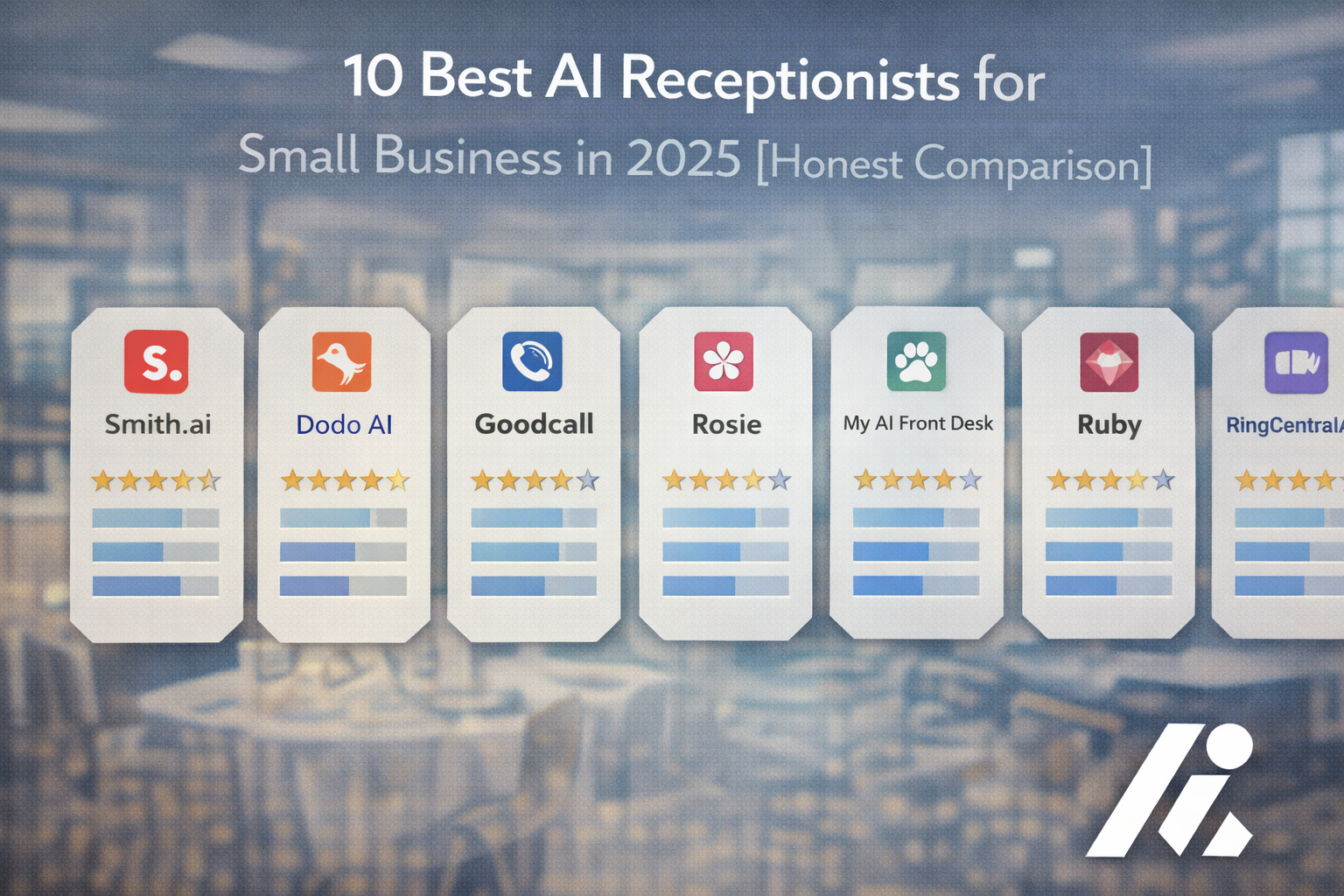
Based on features, pricing, ease of use, and customer reviews, here are the leading AI call handling solutions for small and medium-sized businesses in 2025.
Dialiq
Best For: Service-based SMBs needing appointment scheduling and lead capture
Pricing: Starting at $99/month
Key Strengths: Dialiq stands out for its exceptional appointment booking capabilities and seamless integration with major scheduling platforms. The system handles complex scheduling scenarios, including multiple service types, different provider calendars, and location-specific booking rules. Setup takes under 10 minutes, and the natural-sounding AI has been specifically trained for appointment-heavy industries like dental offices, law firms, home services, and medical practices.
Customer results speak volumes: dental practices report 35% increases in booked appointments, while home service companies capture 40% more leads compared to manual call handling. The platform includes built-in lead qualification, automatic follow-up messaging, and detailed analytics on call outcomes.
Best Features:
- Real-time calendar synchronization
- Industry-specific conversation templates
- Zero-friction setup process
- Intelligent call routing for urgent requests
- Comprehensive analytics dashboard
Considerations: Primarily focused on appointment-based businesses, so may not be ideal for pure e-commerce or retail operations.
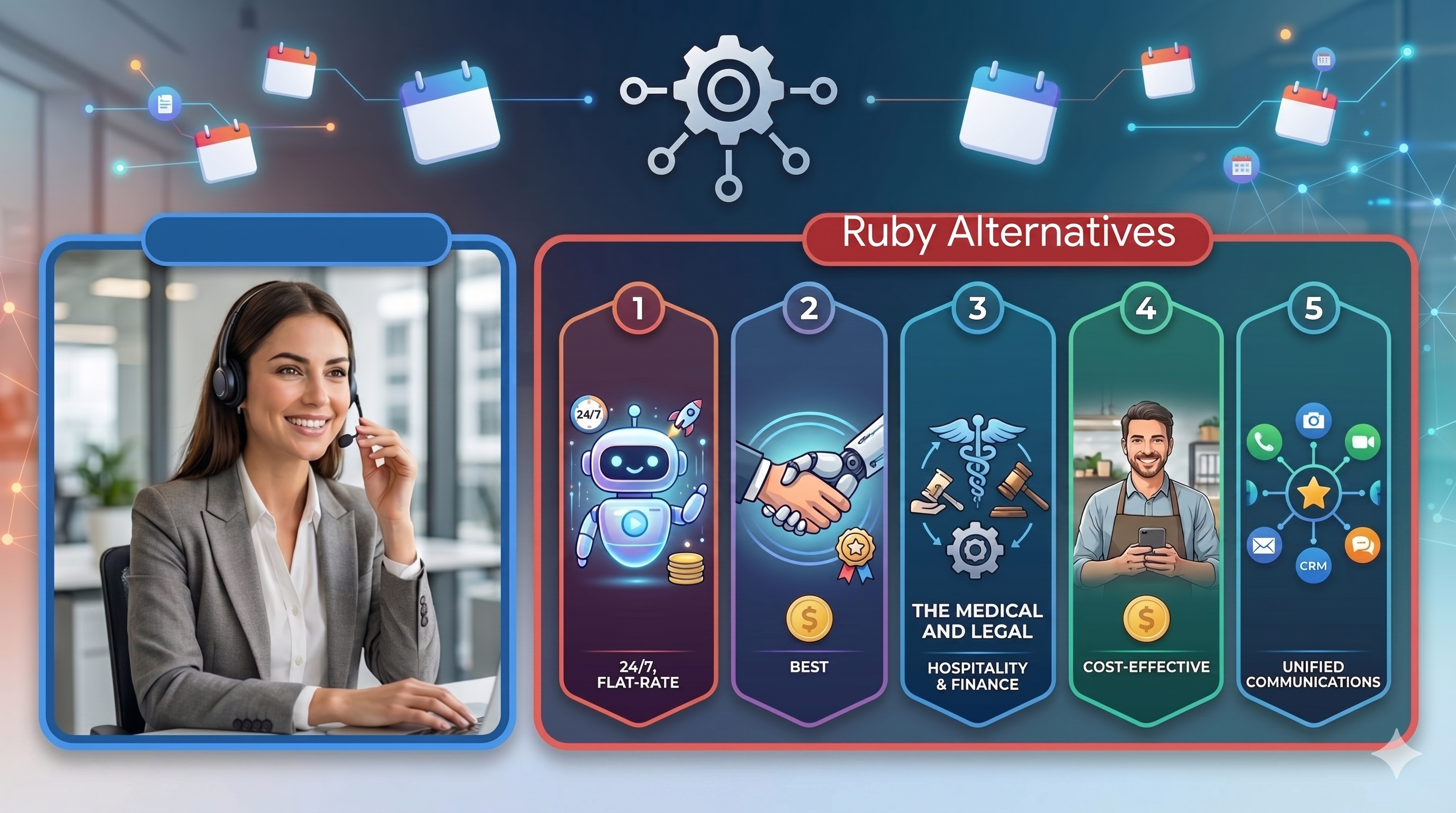
Ruby Receptionist AI
Best For: Businesses wanting a hybrid human + AI approach
Pricing: Starting at $235/month
Key Strengths: Ruby combines AI call handling with the option to escalate to human receptionists when needed. This hybrid approach provides peace of mind for businesses worried about complex customer situations. Their AI handles routine calls while human agents step in for challenging scenarios, ensuring no customer interaction falls through the cracks.
Best Features:
- Bilingual support (English and Spanish)
- Seamless human escalation
- 24/7 availability
- Live chat integration
- Call summary reports
Considerations: Higher cost due to human backup support. May be overkill if your call handling needs are straightforward.
Smith.ai
Best For: Law firms and professional services
Pricing: Starting at $240/month
Key Strengths: Smith.ai has built specific expertise in legal intake and professional service industries. Their AI understands legal terminology, handles confidential information appropriately, and follows protocols for conflict checks. The system excels at capturing detailed client information during initial consultations and qualifying leads based on case type and urgency.
Best Features:
- Legal-specific intake forms
- Secure, compliant call handling
- Detailed call summaries sent within minutes
- Integration with legal practice management software
- Bilingual capability
Considerations: Features and pricing are optimized for legal/professional services, making it less cost-effective for other industries.
Conversational AI by [Competitor Name Removed]
Best For: E-commerce businesses with product questions
Pricing: Starting at $199/month
Key Strengths: This platform excels at handling product-related inquiries, order status questions, and basic customer support. The AI can access your product catalog, check inventory, and even process simple orders over the phone. It's particularly valuable for e-commerce businesses receiving calls about shipping, returns, and product specifications.
Best Features:
- Product catalog integration
- Order tracking capabilities
- Inventory checking
- Returns processing
- Multiple language support
Considerations: Less robust appointment scheduling compared to service-focused platforms. Setup requires more initial configuration for product data.
AnswerConnect AI
Best For: Businesses with high call volumes
Pricing: Starting at $329/month
Key Strengths: AnswerConnect AI handles unlimited simultaneous calls, making it ideal for businesses experiencing high call volumes or seasonal spikes. The platform never sends callers to voicemail due to capacity constraints. It also offers extensive customization options for different call types, business hours, and routing rules.
Best Features:
- Unlimited concurrent call handling
- Advanced call routing logic
- Seasonal/holiday scheduling
- Emergency call protocols
- Detailed performance metrics
Considerations: Higher price point may not be justified for businesses with lower call volumes.
Pricing Models Explained
Understanding how AI call handling services price their offerings helps you choose the most cost-effective option for your needs.
Per-Minute Pricing
Some services charge based on total talk time, typically ranging from $0.75 to $2.50 per minute. This model works well if you receive relatively few calls or very brief calls. However, costs can escalate quickly if you have longer customer conversations.
Example: At $1.50/minute, a business handling 30 calls per week averaging 5 minutes each would pay approximately $900/month (30 calls × 4 weeks × 5 minutes × $1.50).
Per-Call Pricing
Other platforms charge a flat fee per call answered, usually $2 to $5 per call. This provides more predictable costs when call lengths vary significantly. It's ideal for businesses where some calls take 2 minutes while others take 15 minutes.
Example: At $3/call, handling 120 calls per month costs $360 regardless of call duration.
Flat Monthly Rate
Services like Dialiq offer flat monthly rates with included call allowances (e.g., $149/month for up to 200 calls). This provides the most predictable budgeting and often represents the best value for businesses with consistent call volumes. Overage fees apply if you exceed the included calls, typically at a reduced per-call rate.
Example: A business receiving 150-200 calls monthly pays a consistent $149 with no surprises.
Hybrid Pricing
Some services combine a base monthly fee with per-minute or per-call charges. While potentially offering flexibility, these models require careful calculation to understand your true monthly costs.
Hidden Costs to Watch For
Beyond the advertised pricing, be aware of these potential additional expenses:
Setup Fees: Some services charge $100-500 for initial configuration and training.
Integration Costs: Connecting to your CRM, calendar, or other systems may incur additional monthly fees of $50-150.
Overage Charges: Pay careful attention to what happens when you exceed your plan limits. Overage rates can be significantly higher than base pricing.
Feature Upgrades: Advanced features like voice cloning, priority support, or additional integrations often require higher-tier plans.
Contract Terms: Monthly contracts offer flexibility but may cost more than annual commitments. Calculate whether an annual contract's savings justify the commitment.
Implementation Timeline and Best Practices
Implementing an AI call handling service doesn't have to be complicated. Most SMBs can be fully operational within 1-2 weeks by following this roadmap.
Week 1: Setup and Configuration
Start by defining your call handling scenarios. What are the most common reasons customers call? What information do you need to collect? What actions should the AI take (book appointments, capture leads, transfer calls)?
Next, configure your greetings and conversation flows. Most platforms provide templates for common industries—customize these to match your brand voice. Connect your calendar system, CRM, and any other tools you want integrated. Finally, set up your notification preferences so the right team members receive alerts about important calls or follow-up actions.
Week 2: Testing and Refinement
Before going live, conduct extensive testing. Have team members call from different numbers, ask various questions, and try to "break" the system. Document any issues or unexpected responses. Review these test calls with your implementation specialist to fine-tune the AI's responses.
Create a soft launch by forwarding some—but not all—calls to the AI system. This allows you to catch any remaining issues before full deployment. Monitor these initial real calls closely and adjust as needed.
Ongoing Optimization
After launching, review call recordings and transcripts weekly for the first month, then monthly thereafter. Look for patterns in customer questions you didn't anticipate, conversation paths that could be improved, and opportunities to add new capabilities. The best AI systems learn from every interaction, but you should actively optimize based on your observations.
Track key metrics like call answer rate, customer satisfaction, conversion rates, and time saved. Share successes with your team to build enthusiasm for the AI system. Most businesses find that minor adjustments in the first 30 days lead to significantly better performance.
Making the Final Decision
Choosing the right AI call handling service ultimately depends on your specific business needs, call volume, and budget. Here's a framework to guide your decision.
For appointment-based service businesses (dental, medical, legal, home services): Prioritize systems with robust scheduling capabilities and calendar integration. Dialiq or Smith.ai would be strong choices.
For high-volume call centers or businesses with seasonal spikes: Choose platforms offering unlimited concurrent calls like AnswerConnect AI.
For businesses wanting human backup: Consider hybrid solutions like Ruby Receptionist AI that combine AI efficiency with human oversight.
For tight budgets: Start with flat-rate pricing models offering predictable costs. You can always upgrade as your needs grow.
Most importantly, take advantage of free trials. Every reputable AI call handling service offers a trial period—use this to test with real customers and real scenarios before committing.
Real Results from SMBs Like Yours
The proof of any business tool is in the results it delivers. Here's what businesses across various industries are experiencing with AI call handling:
A dental practice in Florida implemented AI call handling and increased appointment bookings by 35% within the first month. Their AI answered 94% of calls within 10 seconds, compared to 62% previously. The practice now captures after-hours appointment requests that previously went to voicemail and were never returned.
A plumbing company in Texas automated their emergency call handling and saw a 40% increase in service calls during evenings and weekends. The AI qualifies the urgency of each call and immediately dispatches technicians for emergencies while scheduling non-urgent service calls for the next available slot.
A family law firm in California reduced their receptionist workload by 70%, allowing their team to focus on client service rather than answering repetitive initial consultation questions. The AI captures detailed intake information before scheduling consultations, saving attorneys 15-20 minutes per prospect.
These businesses share common themes: dramatically increased call answer rates, captured opportunities that would have been missed, reduced staffing costs, and improved customer satisfaction through instant response times.
Taking the Next Step
AI call handling has moved from a nice-to-have luxury to a competitive necessity for SMBs in 2025. The technology has matured to the point where it's affordable, reliable, and effective for businesses of all sizes.
The question isn't whether to implement AI call handling—it's which solution best fits your specific needs and when you'll make the switch.
Start by calculating how many calls you currently miss and what those missed opportunities cost your business. This number often provides the motivation needed to prioritize automation. Then request trials from 2-3 services that align with your industry and needs. Test them rigorously with real scenarios. Finally, implement the solution that delivers the best combination of features, ease of use, and value for your specific situation.
Your customers are calling right now. Make sure someone—or something—is always there to answer.