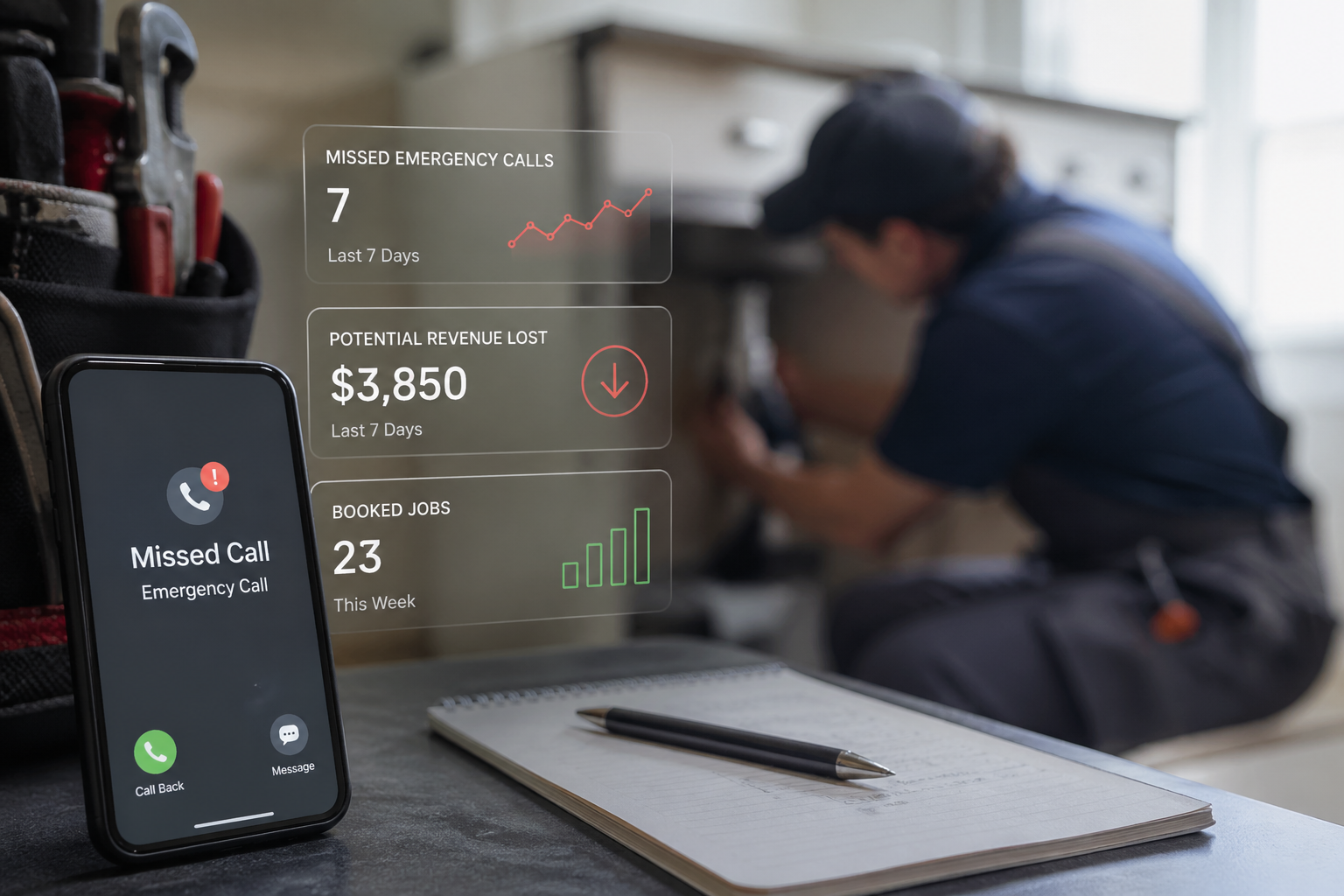
Are you losing $80,000+ in annual catering revenue because you can't answer the phone during events? The average catering company misses 34% of inbound inquiries during peak service hours, and here's the painful truth: 68% of those potential clients never call back. When someone's planning a wedding reception for 200 guests or coordinating a corporate gala, they're calling 4-5 caterers in rapid succession. If you're plating appetizers for a current event when that call comes in, you've just handed a $15,000 contract to your competitor who answered.
The catering industry operates in a uniquely challenging environment where your busiest revenue-generating hours (executing events) directly conflict with your highest-value inquiry times (booking future events). Traditional solutions like hiring additional office staff or using basic voicemail systems leave thousands of dollars on the table every single month. But there's a solution that's transforming how forward-thinking catering companies capture and convert event inquiries without adding headcount or complexity.
The $80,000 Problem: Why Catering Companies Miss Revenue Opportunities
Every catering business faces the same operational paradox: you need to be available when clients want to book events, but that's precisely when you're executing other events and can't answer the phone. Let's quantify what this actually costs your business.
The True Cost of Missed Catering Inquiries:
- Average wedding catering contract: $8,500-$15,000
- Corporate event average: $3,200-$8,000
- Private party average: $1,800-$4,500
- Holiday party season average: $2,500-$6,000
If your catering company handles 60 events annually at an average value of $5,500, missing just 30% of inquiries means you're leaving approximately $99,000 in potential revenue uncaptured. Even worse, peak inquiry times directly correlate with your busiest service periods: Friday and Saturday evenings for weddings, weekday lunchtimes for corporate events, and December for holiday parties.
Sarah Martinez, owner of Elegance Catering in Portland, discovered this the hard way during wedding season. "We tracked it for one month and found that between 6 PM and 10 PM on Fridays and Saturdays—our absolute peak event hours—we received 47 event inquiries. We answered 12 of them. That's 35 potential weddings and celebrations we completely missed because we were literally serving dinner to other clients. When I calculated the revenue impact, I felt physically sick."
The problem extends beyond just missed calls. Even when you do capture inquiries, the delays in response time dramatically impact conversion rates. A Harvard Business Review study found that companies responding to inquiries within 5 minutes are 100 times more likely to convert than those responding after 30 minutes. For catering businesses executing 6-hour events, "within 5 minutes" becomes impossible without dedicated staff solely answering phones.
Calculate Your Missed Revenue: Use our free missed revenue calculator to see exactly how much your catering business is losing to unanswered inquiries. Input your average contract value, estimated monthly inquiries, and current answer rate to get your personalized report.
How AI Phone Systems Transform Catering Event Bookings
An AI phone system for caterers functions as your 24/7 event booking specialist, capturing every inquiry with the same professional service you'd provide in person. Unlike basic voicemail or generic answering services, these systems understand catering-specific workflows and can handle complex event discussions intelligently.
Here's how a modern AI booking system revolutionizes catering operations: When a potential client calls asking about availability for their daughter's June wedding, the AI receptionist engages in a natural conversation, gathering essential details like event date, guest count, venue location, service style preference, and dietary requirements. It checks your integrated calendar in real-time, confirms availability for that date, provides preliminary pricing ranges based on parameters you've set, and either books a consultation appointment or flags the inquiry as high-priority for immediate follow-up.
Marcus Chen's corporate catering company in Chicago implemented an AI phone system six months ago and saw transformative results. "The system handles 100% of our after-hours inquiries, which represent about 40% of our total incoming calls. It gathers all the essential information—event type, date, guest count, budget range, and special requirements—then books consultations directly into our calendar. We wake up to a pipeline of qualified leads with all the details we need to prepare personalized proposals. Our conversion rate on these AI-captured leads is actually 8% higher than our manually-answered calls because the information is complete and accurate."
The sophisticated natural language processing in modern AI receptionists allows them to handle nuanced catering conversations that would stump traditional IVR systems. When someone asks, "Do you do Indian vegetarian weddings for 300 people?" the AI doesn't just say "press 1 for weddings." It responds conversationally: "We absolutely specialize in South Asian wedding catering and have extensive vegetarian and vegan menu options. I'd love to schedule a tasting consultation with our executive chef to discuss your specific vision. Are you available this Thursday or Friday afternoon?"
See It In Action: Watch our 2-minute demo video showing an AI receptionist handling a complex wedding catering inquiry from initial contact through consultation booking.
Essential Features Every Catering AI Phone System Must Have
Not all AI phone systems are created equal, especially for the nuanced requirements of catering businesses. When evaluating solutions, these features are non-negotiable for maximizing your event booking conversion rates.
Intelligent Calendar Integration
Your AI system must connect seamlessly with your existing calendar platforms—Google Calendar, Outlook, or specialized catering management software like Caterease or ChefTec. The system should check real-time availability for consultation appointments and flag potential event date conflicts before confirming bookings. For catering companies managing multiple event types, the AI should understand your calendar rules: consultation slots during weekday business hours, buffer times between large events, and blackout periods during your busiest execution times.
Customized Question Workflows
Generic inquiry forms don't work for catering. Your AI receptionist needs customized question flows for different event types: corporate lunches, weddings, private parties, and recurring contracts. The system should intelligently adapt based on responses—if someone mentions "gluten-free" or "kosher," it should automatically gather relevant dietary restriction details. If they mention a specific venue, it should note that for future logistics planning.
Budget Qualification Without Awkwardness
One of the most valuable features is tasteful budget qualification. The AI can ask, "To ensure we propose the perfect menu, what budget range are you considering per person?" or "Most of our wedding packages range from $75-150 per guest, depending on service style and menu selection. Does that align with your planning?" This pre-qualifies leads without the awkwardness that sometimes occurs in live conversations about money.
Multi-Channel Communication
Beyond phone calls, your AI system should handle SMS inquiries, online booking form submissions, and email requests through a unified interface. After the initial phone conversation, it should automatically send a confirmation text or email with consultation details, menu previews, and any requested information. This omnichannel approach meets modern clients where they prefer to communicate.
Smart Routing for Specialty Requests
The AI should recognize when inquiries require immediate human expertise—large-budget corporate contracts, celebrity events, or complex dietary requirements—and route these to specific team members. Raquel Fernandez's Miami catering company sets her AI to automatically transfer calls mentioning budgets above $50,000 or VIP clients directly to her personal cell during business hours, while handling standard inquiries independently.
Integration with Catering Management Software
Look for AI systems that integrate with platforms like CaterTrax, Total Party Planner, or Gather. This allows the AI-captured inquiry data to flow directly into your event management workflow, eliminating manual data entry and ensuring nothing falls through the cracks. When someone books a consultation, their event details, dietary notes, and contact information should automatically populate in your CRM.
Peak Season Scalability
During December holiday party season or June wedding season, your call volume might triple. Your AI phone system should handle this surge effortlessly—answering 10 simultaneous calls with the same professionalism as one call during slow months. This scalability is impossible with human receptionists without significant additional hiring costs.
The ROI calculation is straightforward: if your AI system costs $699 monthly but captures even 3 additional events per month at an average value of $4,000, you've generated $12,000 in revenue at a cost of $699—a 17:1 return. Most catering companies using AI phone systems for catering businesses report capturing 8-12 additional events monthly.
Implementing an AI Phone System in Your Catering Business
The transition to an AI booking system is surprisingly straightforward, typically taking less than one week from decision to full operation. Here's exactly what the implementation process looks like for catering companies.
Phase 1: System Configuration (Days 1-2)
Your first step involves customizing the AI to understand your specific catering business. This includes defining your service offerings (wedding catering, corporate events, drop-off service, full-service events), typical menu categories, pricing ranges, service areas, and capacity limits. You'll create conversation flows for different event types—the questions asked for a wedding catering inquiry differ from those for a corporate lunch order.
The system needs your calendar integrated and rules established: consultation appointment lengths, available time slots, buffer times between events, and blackout dates. Most catering companies also set up their standard response templates: menu previews to send after initial conversations, consultation confirmation messages, and follow-up sequences for inquiries that don't immediately book.
Phase 2: Training & Testing (Days 3-4)
Before going live, you'll test the system extensively with sample inquiries. Call your own number and go through typical scenarios: a bride asking about June wedding availability, a corporate client requesting recurring lunch service, someone with extensive dietary restrictions. The AI provider will adjust responses based on your feedback until conversations feel natural and complete.
Most AI phone systems for caterers include accent and regional dialect training, especially important if you serve diverse communities. You'll also set up your team's notification preferences: who gets alerted for high-value inquiries, how emergency booking requests are handled, and what information triggers immediate human escalation.
Phase 3: Soft Launch (Days 5-6)
Start by running the AI system during your after-hours and weekend periods while maintaining your normal phone coverage during business hours. This allows you to monitor performance, review conversation transcripts, and make adjustments without risking your primary inquiry periods. Most catering companies find the AI handles 85-90% of these calls independently, escalating only truly complex or urgent situations.
Review the inquiry data captured: Are you getting all the information needed? Are clients understanding the AI and engaging naturally? Are consultation appointments being booked successfully? Make refinements based on real performance data.
Phase 4: Full Deployment (Day 7+)
Once you're confident in the system's performance, expand to full coverage. The AI handles all incoming calls with intelligent routing: standard inquiries are managed automatically, high-value or complex situations are transferred to available team members, and urgent matters outside your protocols get appropriate escalation.
The beauty of modern AI systems is their learning capability. Every conversation improves future performance. If the AI encounters a question it can't handle well, the system flags it for training. Within 2-3 weeks, your AI receptionist will handle 95%+ of inquiries as effectively as your most experienced event coordinator.
Ongoing Optimization
Monthly, review your system's performance analytics: inquiry volume, booking conversion rates, common questions, and areas where human escalation occurred. Adjust your pricing information as menus change, update blackout dates for booked event days, and refine qualification questions based on what distinguishes your most profitable clients.
Nicole Richards of Artisan Catering in Nashville describes her experience: "I thought implementing AI would be technically overwhelming, but the entire setup took me four hours spread across three evenings. I recorded sample conversations, approved the script templates, and connected my calendar. That's it. The system has handled 843 inquiries since then with a 96% satisfaction rate according to our follow-up surveys. It's the single best business decision I made this year."
Ready to Implement? Use our free implementation checklist and timeline designed specifically for catering companies transitioning to AI booking systems.
Maximizing ROI: Advanced Strategies for Catering AI Systems
Once your basic AI phone system is operational, these advanced strategies help catering companies extract even more value from the technology and further increase event bookings.
Dynamic Pricing Communication
Configure your AI to provide pricing ranges that adjust based on event details. For example, if someone mentions a wedding for 150 guests, the AI might say: "Our wedding packages for that size typically range from $11,000 to $18,000, depending on menu selection, service style, and bar options. I'd love to schedule a consultation where we can design a custom package for your vision." This transparency builds trust while qualifying budget expectations early.
Automated Follow-Up Sequences
Don't let warm leads go cold. Set your AI system to automatically follow up with inquiries that didn't immediately book consultations. A tasteful text message 24 hours later—"Hi Sarah, this is Elegant Affairs Catering following up on your October wedding inquiry. I have Thursday at 2 PM or Friday at 11 AM available for your tasting consultation. Which works better?"—often converts undecided prospects into booked appointments.
Seasonal Messaging Adjustments
Update your AI's conversational scripts seasonally. During holiday party season, emphasize your December availability and group menu options. During summer wedding season, highlight outdoor event expertise and heat-management solutions. This relevance increases engagement and conversion rates.
Multi-Language Support for Diverse Markets
If you serve communities that speak languages beyond English, multilingual AI receptionists dramatically expand your market reach. A Los Angeles catering company serving significant Korean and Armenian populations saw their multicultural wedding bookings increase 89% after enabling Korean and Armenian language support in their AI system.
Integration with Proposal Software
Connect your AI system with proposal platforms like Caterease or Total Party Planner so inquiry data automatically populates proposal templates. When an AI conversation captures event details, your proposal software can immediately generate a preliminary package for your review and customization. This reduces proposal preparation time from 45 minutes to 10 minutes.
Performance Analytics for Business Intelligence
Use the data your AI system collects to make strategic business decisions. Which event types generate the most inquiries? What pricing ranges do most prospects mention? Which referral sources produce the highest-quality leads? What objections or concerns come up most frequently? This intelligence informs your marketing strategy, service offerings, and pricing structure.
David Wu's San Francisco catering company discovered through AI analytics that inquiries mentioning "sustainable" or "locally-sourced" had 64% higher conversion rates and 23% larger average contracts. He adjusted his marketing messaging to emphasize those values and saw his premium bookings increase 41%.
Emergency and Urgent Request Handling
Configure special protocols for last-minute catering requests. If someone calls needing service within 48 hours, your AI can check specifically for short-notice availability, quote rush service fees appropriately, and escalate immediately to your operations manager. Last-minute bookings often come with premium pricing, making these captured inquiries especially valuable.
The most sophisticated catering companies treat their AI phone systems as revenue-generating business intelligence platforms, not just answering services. The combination of perfect inquiry capture, intelligent qualification, automated follow-up, and data-driven insights creates a competitive advantage that compounds over time.
The Future of Catering Event Bookings Is Here
The catering industry is experiencing a fundamental shift in how event inquiries are captured and converted. Companies still relying on traditional phone answering methods are losing market share to competitors who answer every call with professional, intelligent service 24 hours daily.
The numbers tell a compelling story: catering businesses implementing AI phone systems capture 30-40% more event bookings, reduce administrative burden on staff by 60%, improve proposal accuracy through better inquiry data, and create scalable growth without proportional increases in overhead costs.
Think about your busiest event day last year—perhaps a Saturday when you were managing a 200-person wedding. How many potential clients called that day while you were plating desserts or coordinating with vendors? Each of those missed calls represented a lost event, possibly worth $5,000, $10,000, or $15,000. Multiply that across every event you execute throughout the year, and the revenue opportunity becomes impossible to ignore.
The question isn't whether AI booking systems work for catering companies—the case studies and data clearly demonstrate they do. The question is how quickly you'll implement this technology before your competitors capture those lost inquiries instead.
Your competitors are answering calls right now while you're executing events. Make sure those calls are coming to you, not them. The catering companies winning market share in 2025 are those who ensure every single event inquiry gets captured, qualified, and converted—regardless of when it arrives or how busy their kitchens are.