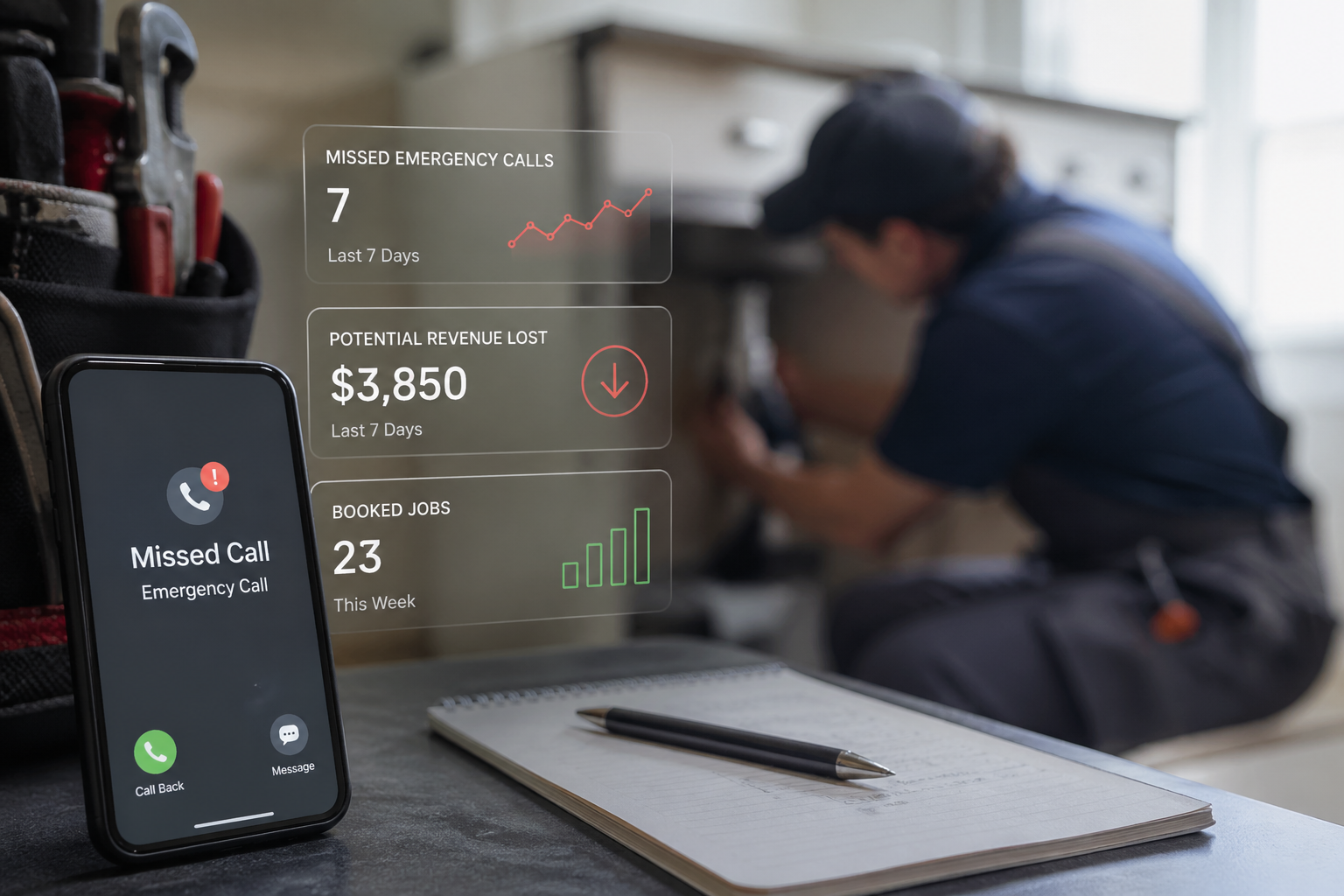
It's 2:47 AM. A frantic family member is calling every bail bondsman in the area, desperately trying to secure release for their loved one. Your competitor with an AI receptionist answers immediately, begins the intake process, and schedules a consultation. Your phone? It went to voicemail.
In the bail bonds industry, timing isn't just important—it's everything. The average bail bondsman loses $127,000 annually from missed after-hours calls alone, according to industry data from the National Association of Bail Insurance Companies. When someone needs a bail bond, they're calling multiple agencies simultaneously. The first one to answer and demonstrate competence typically wins the business.
This is where an AI receptionist for bail bonds becomes not just helpful, but essential for survival in an increasingly competitive market. Modern AI phone systems can handle the unique demands of bail bond operations: emergency coordination, multi-jurisdiction intake, sensitive client communications, and 24/7 availability—all while maintaining the professionalism and urgency your clients expect during their most stressful moments.
Why Traditional Answering Methods Fail Bail Bondsmen
The bail bonds business operates on a unique timeline. Unlike most industries, your busiest hours are often between 10 PM and 6 AM—precisely when traditional answering services struggle most and when hiring additional staff becomes prohibitively expensive.
The Hidden Costs of Traditional Solutions:
Most bail bondsmen try one of three approaches, all of which have critical flaws. Traditional human answering services cost $800-1,500 monthly but often lack the legal knowledge to properly screen calls or handle bail-specific terminology. They also struggle with the emotional intensity of bail bond calls, leading to inconsistent service quality during peak stress moments.
Rotating personal cell phones among partners burns out your team. Studies show that bail bondsmen who handle after-hours calls personally report 67% higher stress levels and 43% lower job satisfaction. The constant interruptions also increase error rates in documentation and financial calculations—critical mistakes in a compliance-heavy industry.
The "just let it go to voicemail" approach is perhaps most costly. Research from the Professional Bail Agents of the United States shows that 84% of callers who reach voicemail will immediately call the next bondsman on their list. In emergency situations, people don't wait for callbacks. They need answers now, and they'll find them elsewhere.
How AI Receptionists Transform Bail Bond Operations
An AI receptionist for bail bonds fundamentally changes how your agency handles the most critical first contact with potential clients. Unlike generic phone automation, specialized AI systems understand bail bond terminology, can navigate jurisdiction-specific requirements, and handle the urgency inherent in every call.
Immediate Emergency Response Protocol:
The moment a call comes in, AI receptionists can assess urgency based on conversational cues. If a caller mentions an arraignment time, upcoming court date, or expresses distress about detention conditions, the system can immediately escalate to your on-call bondsman while simultaneously beginning the intake process. This parallel processing means you're already gathering critical information before you even pick up the escalated call.
Modern AI systems also integrate with court databases and detention facility systems. When a caller provides a booking number or defendant name, the AI can pull preliminary information, verify detention status, and even calculate potential bond amounts based on charge types and jurisdiction rules. This level of preparation was previously impossible without dedicated staff working around the clock.
Intelligent Call Screening and Qualification:
Not every bail bond call represents a viable client. Some callers are shopping for the lowest premium, others lack collateral or qualifying credit, and some are simply gathering information for future reference. AI phone systems for legal services excel at qualifying leads without the emotional burnout that human staff experience from repeated rejection conversations.
The AI can ask preliminary qualifying questions about collateral availability, employment status, residence stability, and co-signer availability. It presents this information in a clear qualification score, allowing you to prioritize callbacks for the most viable prospects. This screening process alone saves the average bail bondsman 12-15 hours weekly—time that can be redirected to client service and business development.
Essential Features for Bail Bond AI Systems
Not all AI receptionists are created equal, and the bail bonds industry requires specific capabilities that general business AI may lack. When evaluating systems, these features should be non-negotiable.
Multi-Jurisdiction Awareness:
Bail bondsmen often operate across county lines or even state boundaries, each with different regulations, fee structures, and procedures. Your AI receptionist must understand these distinctions. When a caller mentions an arrest in a specific jurisdiction, the system should automatically reference the correct bail schedule, fee structure, and procedural requirements for that location.
For example, if someone calls about an arrest in Cook County, Illinois versus Lake County, Indiana, the AI needs to know that Illinois uses a 10% system while Indiana may use different percentage structures. It should also be aware of jurisdictions where bail bondsmen aren't permitted to operate, saving you from wasting time on non-viable inquiries.
Confidential Information Handling:
Bail bond conversations involve sensitive personal information: criminal charges, financial details, family relationships, and sometimes immigration status. Your AI system must maintain strict confidentiality protocols and comply with all applicable privacy regulations. This includes secure data transmission, encrypted storage, and clear policies about what information is recorded and how long it's retained.
The system should also be programmed to recognize when a conversation involves attorney-client privilege considerations or when legal advice is being requested (which must be redirected to licensed professionals). This protective intelligence prevents liability issues while maintaining professional boundaries.
Integration with Bond Management Software:
Efficiency in bail bonds comes from seamless data flow. Your AI receptionist should integrate with existing business systems including bond management software, accounting systems, and CRM platforms. When the AI completes an intake, that information should automatically populate your management system, create a case file, and trigger necessary workflow steps.
Leading integrations include PowerBond, EBondsman, and other industry-specific platforms. The AI can create preliminary bond applications, generate required disclosures, and even initiate background checks—all before you've had your first direct conversation with the client.
Real-World Impact: Case Studies from the Bail Bond Industry
The difference between theory and practice becomes clear when examining actual bail bondsmen who've implemented AI receptionist systems. These real-world examples demonstrate measurable improvements across key business metrics.
Case Study: Bail Bonds Company in Atlanta
Bail Bonds company operates in the competitive Atlanta market, serving Fulton, DeKalb, and Gwinnett counties. Before implementing an AI receptionist, they missed an average of 34 after-hours calls weekly—representing approximately $178,000 in lost annual revenue based on their average bond value and conversion rates.
After deploying an AI receptionist specialized for bail bonds, their after-hours capture rate increased to 94%. More importantly, their average response time dropped from 47 minutes (callback time) to 12 seconds (AI initial response plus escalation when necessary). This speed improvement increased their conversion rate from 23% to 41% for after-hours inquiries.
The AI system also identified an unexpected opportunity: 28% of after-hours calls came from repeat clients or referrals who needed quick information about existing bonds, payment schedules, or court dates. These calls no longer required human intervention at all, freeing the owners to focus on new business development and complex cases.
Case Study: Bonding Services in Phoenix Area
Operating in Maricopa County with occasional cases in Pima and Pinal counties, Southwest Bonding faced a different challenge: language accessibility. The Phoenix metro area has a significant Spanish-speaking population, and Southwest was losing business to bilingual competitors despite offering competitive rates and excellent service.
Their multilingual AI receptionist solution immediately recognized Spanish-speaking callers and conducted complete intake processes in Spanish, including explaining complex legal terms and bonding procedures. Within three months, their Spanish-language inquiries increased by 156%, and their market share in predominantly Hispanic neighborhoods grew by 34%.
The AI's cultural competency extended beyond translation. It understood familial relationship structures, adjusted communication styles appropriately, and even recognized when callers preferred indirect communication approaches common in some Hispanic cultures. This nuanced service quality actually exceeded what their previous human answering service had provided.
Implementation Strategy for Bail Bond Agencies
Successfully deploying an AI receptionist requires thoughtful planning and proper configuration. Bail bondsmen who rush implementation often miss critical customization opportunities that would significantly improve performance.
Phase 1: Script Development and Compliance Review
Begin by documenting your current intake process, including every question asked, every disclosure required, and every piece of information needed to evaluate a potential bond. This becomes the foundation for your AI's conversation flow. Don't skip this step—a well-structured intake process makes the difference between a helpful AI and a frustrating one.
Have your attorney review the AI's scripts for compliance with state and local regulations. Each jurisdiction has specific disclosure requirements, prohibited practices, and mandatory language. Your AI must incorporate these elements exactly as required, including timing requirements (what must be disclosed before certain questions can be asked) and documentation standards.
Phase 2: System Integration and Testing
Connect your AI receptionist to your existing technology ecosystem. This typically includes your bond management software, calendar system, payment processor, and CRM. Proper integrations ensure that information flows seamlessly without manual data entry or potential transcription errors.
Testing should involve both typical scenarios and edge cases. Call the system pretending to be a frantic family member at 3 AM. Try intentionally confusing the AI. Attempt to make it provide legal advice it shouldn't give. Identify weaknesses and refine the programming before going live.
Phase 3: Gradual Rollout and Staff Training
Don't switch entirely to AI overnight. Begin with after-hours coverage only, maintaining your existing process during business hours. This allows you to evaluate performance in lower-stakes situations and identify necessary adjustments before handling high-volume periods.
Train your team on how to work alongside the AI. They should understand how to access intake information the AI has gathered, how to interpret the qualification scores it provides, and how to handle escalated calls efficiently. The AI should make your team more effective, not replace their judgment and relationship-building abilities.
Measuring ROI and Performance Metrics
Implementing any new system requires accountability. How do you know if your AI receptionist is actually improving your bail bond operations? Track these specific metrics to quantify impact and identify optimization opportunities.
Call Capture Rate:
This fundamental metric measures what percentage of inbound calls receive a response. Before AI, most bail bondsmen capture 60-70% of calls during business hours and only 15-25% after hours. Quality AI implementations typically achieve 95%+ capture rates across all hours. Calculate the revenue impact by multiplying missed calls by your average bond value and conversion rate.
Time to First Response:
In the bail bonds industry, speed determines who gets the business. Track how quickly callers receive meaningful engagement (not just "we'll call you back"). Human answering services average 15-45 minutes for substantive response. AI receptionists provide immediate engagement, typically escalating urgent matters to human bondsmen within 2-3 minutes while handling routine inquiries independently.
Qualification Accuracy:
Your AI should improve lead quality by screening out non-viable inquiries and prioritizing promising prospects. Track what percentage of AI-qualified leads convert to actual bonds compared to your historical conversion rates. Well-tuned systems typically improve conversion rates by 35-60% because bondsmen spend time only on pre-qualified, ready-to-proceed clients.
Staff Time Savings:
Calculate how many hours weekly your team previously spent on initial intake calls, information requests, and appointment scheduling. Most bail bond agencies report 18-25 hours weekly in recovered staff time after AI implementation. Value this time at your staff's hourly cost plus the opportunity cost of revenue-generating activities they can now pursue instead.
Advanced Features: Beyond Basic Call Answering
As AI technology evolves, bail bondsmen can access increasingly sophisticated capabilities that transform how they operate. These advanced features represent the cutting edge of AI receptionist technology.
Predictive Risk Assessment:
Some AI systems now analyze intake information to provide preliminary risk assessments for potential bonds. By comparing provided information against historical data patterns, the AI can flag elevated risk factors: employment instability, prior failures to appear, weak community ties, or inconsistencies in provided information. This doesn't replace professional judgment but adds an analytical layer that helps prioritize resources.
Automated Court Date Management:
AI systems can now integrate with court calendars and automatically remind clients of upcoming appearances via text, email, or voice calls. This reduces failure-to-appear rates, which directly impacts your bottom line and industry reputation. The system can escalate to human contact if a client indicates they may miss a court date, allowing intervention before forfeiture becomes necessary.
Real-Time Market Intelligence:
Advanced AI receptionists track call patterns, inquiry sources, and competitor mentions to provide business intelligence. If you suddenly receive fewer calls from a particular neighborhood or demographic, the AI can alert you to potential market shifts. If callers frequently mention a competitor, you gain insight into your competitive landscape without expensive market research.
Overcoming Common Concerns and Objections
Bail bondsmen considering AI receptionists often raise legitimate concerns about technology limitations, client acceptance, and operational risks. Addressing these concerns directly helps make informed decisions.
"Clients need to talk to a real person during emergencies":
This concern reflects genuine care for clients during stressful situations. However, consider that most clients care more about immediate response and competent help than whether they're initially speaking with a human or AI. The key is that high-urgency calls get escalated to human bondsmen within minutes, while the AI handles information gathering that would happen anyway.
Many bail bondsmen report that clients actually appreciate the AI's calm, consistent demeanor during emotionally charged moments. Unlike human staff who may become flustered or judgmental, AI maintains professional composure while gathering necessary information efficiently. The human connection happens where it matters most—during the decision-making and relationship-building phases.
"What if the AI makes mistakes with legal information":
This is perhaps the most important concern to address properly. Your AI should never provide legal advice—it should gather information, provide procedural explanations, and escalate questions requiring professional judgment to licensed bondsmen. Proper programming includes clear boundaries about what information the AI can and cannot provide.
Additionally, all AI systems should include disclaimers that information provided is general in nature and that specific situations require professional evaluation. The AI should be programmed to recognize when conversations venture into legal advice territory and redirect appropriately. Regular compliance audits of AI call recordings help ensure these boundaries are maintained.
"AI technology seems too expensive for small agencies":
Cost concerns are understandable, but compare realistic alternatives. A 24/7 human answering service costs $800-1,500 monthly and still misses the specialized knowledge and integration capabilities you need. AI receptionist pricing for bail bonds typically ranges from $99-699 monthly depending on call volume and features—often less than human alternatives while providing superior capability.
More importantly, calculate the opportunity cost. If you're missing even 20 after-hours calls monthly with an average bond value of $5,000 and a 25% conversion rate, that's $25,000 in lost monthly revenue. The AI system pays for itself many times over through captured business alone, before considering staff time savings and operational efficiency gains.
The Future of AI in Bail Bond Operations
The bail bonds industry stands at a technological inflection point. Early adopters of AI receptionist technology are gaining significant competitive advantages, while agencies clinging to traditional methods increasingly struggle with operational costs and missed opportunities.
Looking ahead, expect AI capabilities to expand into areas like automated collateral evaluation, real-time fraud detection, and predictive analytics for failure-to-appear risk. Integration with digital identity verification systems will streamline the approval process. Blockchain-based smart contracts may eventually automate certain administrative aspects of bond agreements.
However, the human element remains irreplaceable in bail bonds. Judgment about character, assessment of risk factors that don't appear on forms, and the relationship-building that creates referral networks—these require human insight and experience. The most successful bail bondsmen will be those who use AI to handle routine tasks efficiently while focusing their personal expertise on decisions and relationships that truly require human judgment.
Getting Started: Your Action Plan
If you're ready to explore how an AI receptionist can transform your bail bond operations, follow this strategic implementation roadmap.
Start by documenting your current call handling process and identifying pain points. Which hours see the most missed calls? What types of inquiries consume the most staff time? Where do potential clients drop off in your current intake process? This analysis reveals where AI will deliver the most immediate value.
Request demonstrations from providers specializing in legal and bail bond services. Don't settle for generic business AI—you need systems programmed with bail bond terminology, multi-jurisdiction awareness, and appropriate compliance safeguards. During demos, present realistic scenarios including emotionally charged callers, complex multi-defendant situations, and edge cases specific to your practice areas.
Implement in phases rather than all at once. Begin with after-hours coverage, validate performance, then gradually expand to business hours overflow handling, then to full-time primary answering. This measured approach allows refinement while minimizing disruption to established client relationships.
Conclusion: Answering Every Call, Capturing Every Opportunity
The bail bonds industry operates in a perpetual state of emergency. Someone always needs help, regardless of whether it's 2 PM or 2 AM. Your ability to respond immediately, professionally, and competently during these critical moments determines whether you thrive or merely survive.
An AI receptionist for bail bonds isn't about replacing the human judgment and relationship skills that define successful bondsmen. It's about ensuring you never miss the opportunity to apply those skills. It's about being available when clients desperately need you, capturing every potential case, and operating efficiently enough to maintain profitability in an increasingly competitive market.
The bondsmen who embrace this technology now will establish market dominance that becomes progressively harder to challenge. Those who wait risk falling behind competitors who answer faster, qualify better, and operate more efficiently. In an industry where the difference between getting the call and missing it often comes down to seconds, that competitive gap quickly becomes insurmountable.
Ready to capture every emergency call and grow your bail bond business? Start your free 14-day trial of Dialiq's AI receptionist system—no credit card required. See firsthand how 24/7 emergency coordination can transform your operations.