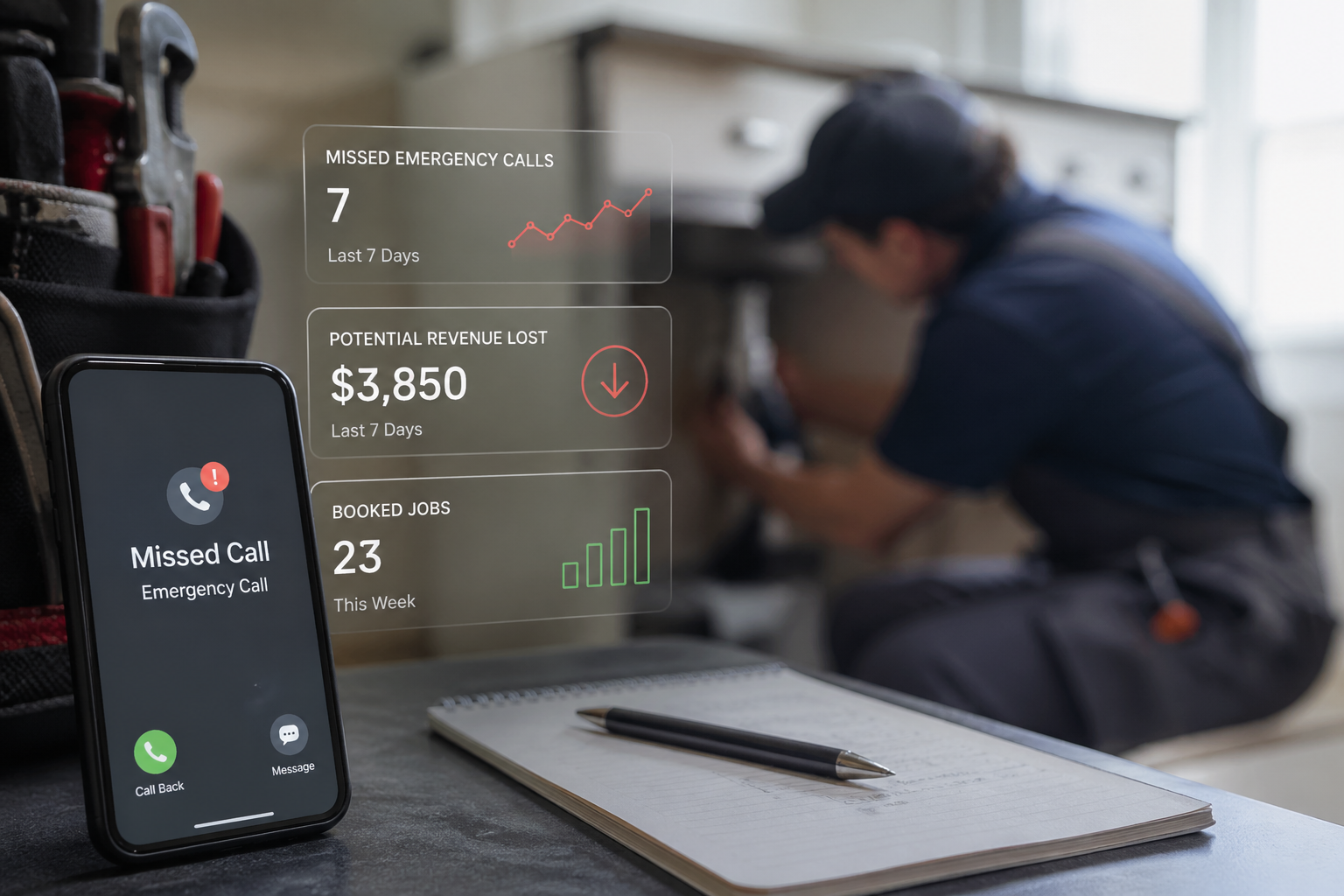
Why Busy Clinics Are Turning to Virtual Assistants
Clinic virtual assistant solutions are changing how healthcare practices handle administrative work, patient communication, and daily operations. Here's what you need to know:
- Remote professional who handles scheduling, billing, patient communication, and data entry
- AI-powered systems that answer calls, book appointments, and manage workflows 24/7
- Cost-effective alternative to in-house staff, saving practices 40-60% on operational costs
- HIPAA-compliant support that integrates with your existing EMR/EHR systems
Key Benefits:
- Save up to $35,000 annually compared to traditional medical office staff
- Free clinical staff from paperwork to focus on patient care
- Never miss a patient call or inquiry, even after hours
- Reduce physician burnout and improve work-life balance
Is your waiting room packed while the phone rings off the hook? Are patient notes stacking up while your staff looks exhausted? You're not alone. Healthcare practices are often overwhelmed by administrative tasks that pull focus from patient care. An in-house medical assistant can cost over $25/hour plus benefits and overhead, yet missed calls and scheduling errors can still happen as your team struggles to keep up.
The solution? A clinic virtual assistant—either a trained remote professional or an AI-powered system that handles the administrative load without the overhead costs or staffing headaches.
Virtual assistants handle everything from appointment scheduling and insurance verification to medical scribing and patient follow-ups. For example, AI scribes have saved physicians thousands of hours in documentation time. Practices using VAs report better work-life balance, higher patient satisfaction, and more bandwidth to focus on revenue-generating activities.
I'm Shaunak, and I'm building DialIQ—an AI receptionist designed to ensure small businesses never miss a call. Having worked across 40+ industries including medical practices, I've seen how clinic virtual assistant technology transforms operations and reduces the chaos of missed calls and administrative overload.
What Can a Virtual Assistant Do for Your Clinic?
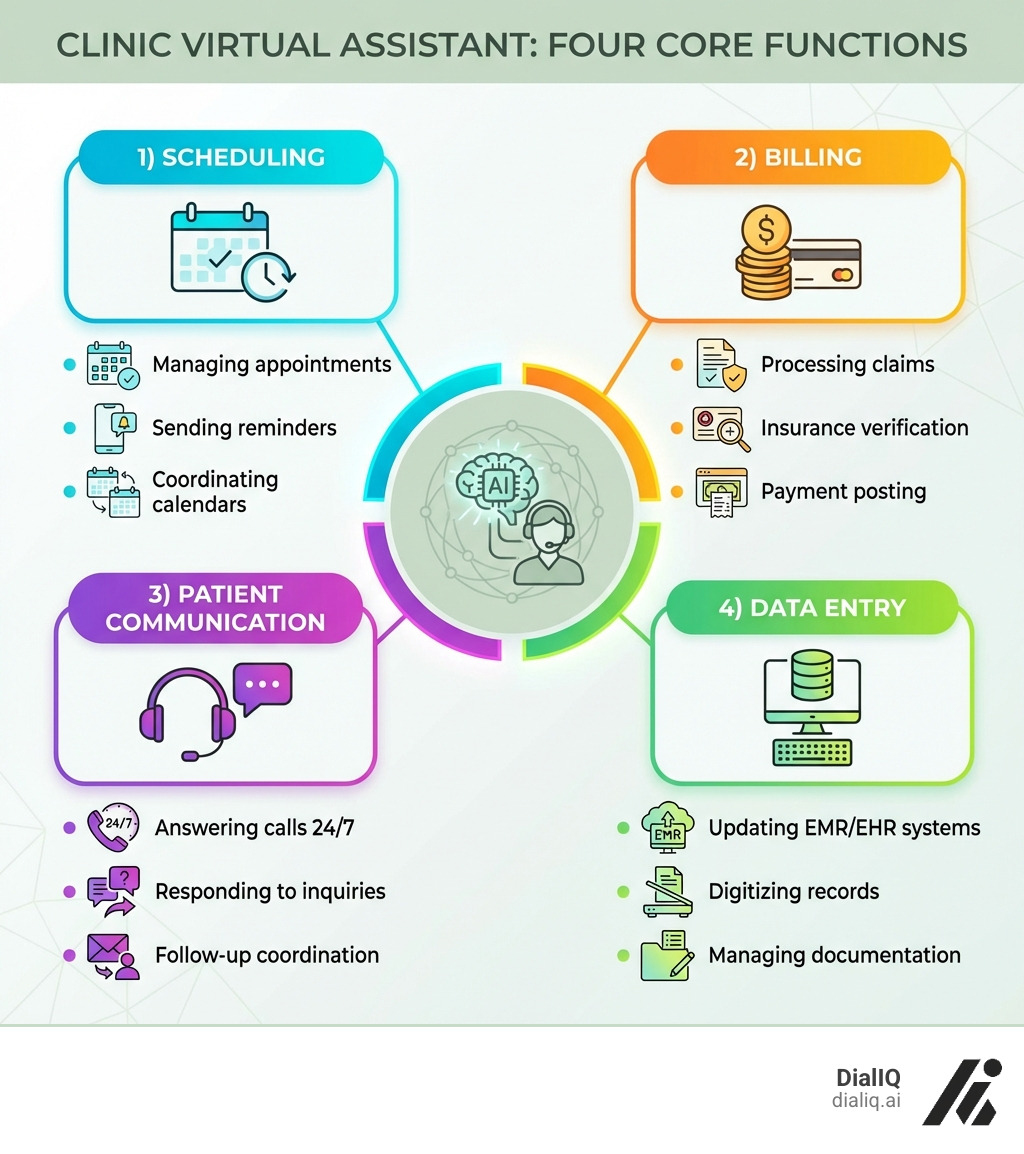
A clinic virtual assistant is a remote professional or an intelligent AI system trained to support healthcare practices. Think of them as your clinic's remote superhero, tackling the daily tasks that can overwhelm your in-house team and detract from patient care.
These virtual helpers manage a wide array of responsibilities. They handle administrative tasks like organizing digital files and managing emails, ensuring your practice runs smoothly. For patient communication, they act as an extension of your front desk, handling every interaction professionally. They also excel in back-office operations, including data entry and system updates, freeing your on-site staff to focus on direct patient engagement.
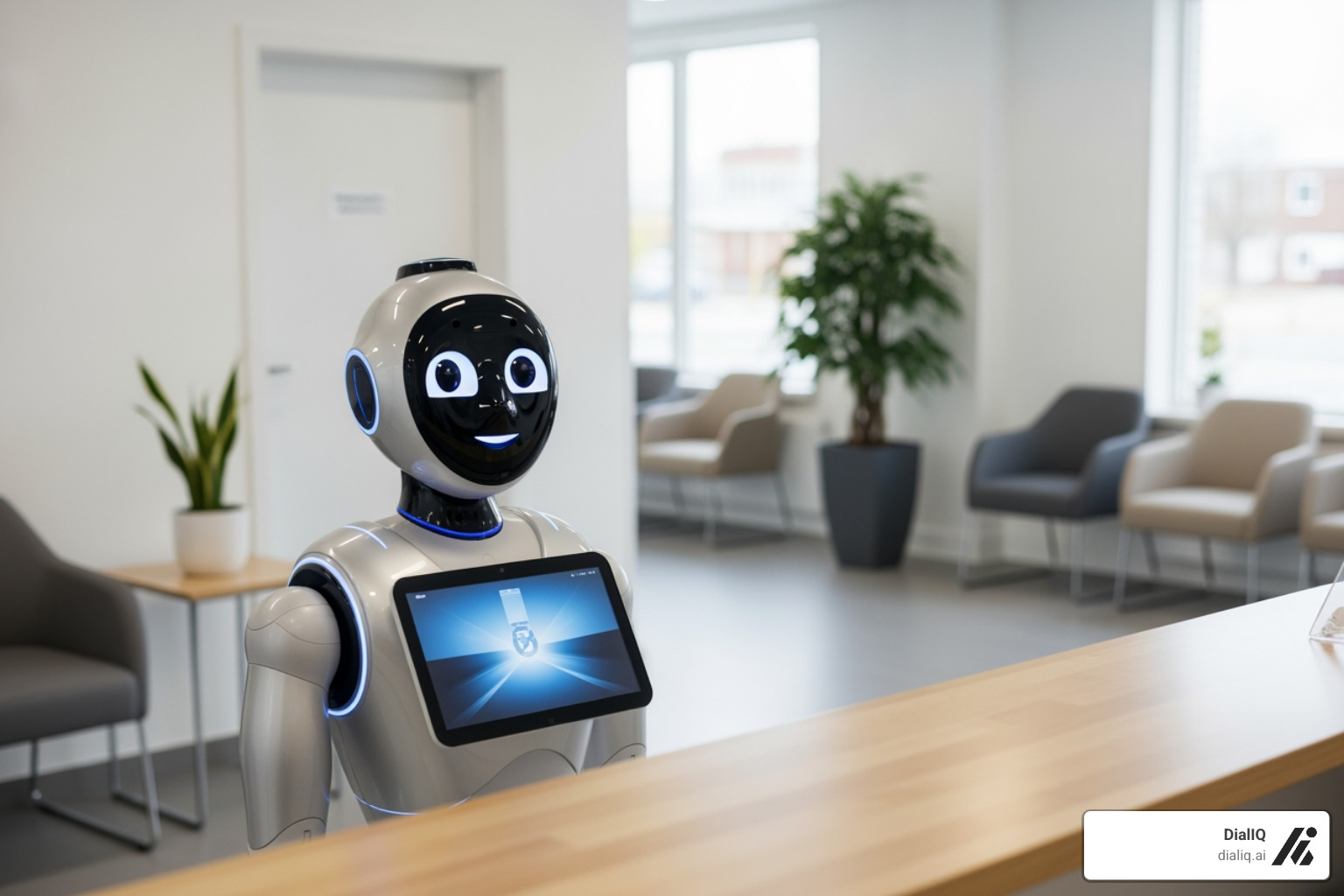
A Day in the Life: Key Responsibilities
So, what does a clinic virtual assistant actually do? Their tasks are designed to offload the administrative burden from your staff. A virtual assistant can often handle time-consuming daily tasks with greater efficiency.
Here's a breakdown of typical responsibilities:
- Appointment Scheduling and Management: VAs handle new bookings, reschedules, and reminders to manage your calendar, optimize patient flow, and reduce no-shows.
- Insurance Verification: Before a patient's visit, a VA can verify their insurance coverage, ensuring a smoother billing process.
- Patient Intake: VAs can streamline the intake process by sending out forms and collecting medical history, making the first visit less stressful.
- Answering Phones and Managing Calls: An AI-powered clinic virtual assistant can answer calls, route them, take messages, and provide information, ensuring no patient inquiry goes unanswered, even after hours.
- Email Management: A VA can keep your inbox organized by sorting, prioritizing, and responding to patient emails and general inquiries.
- Data Entry and Record Keeping: VAs can digitize paper forms, update electronic health records (EHR/EMR), and ensure all data is entered carefully.
- EMR/EHR Updates: They can update patient information, enter lab results, process prescription refills, and manage referrals, becoming proficient in systems like Epic, Cerner, Athenahealth, or eClinicalWorks.
Specialized Support: From Billing to Medical Scribing
Beyond general admin, many VAs offer specialized support for healthcare's unique demands. Unlike a traditional VA, a healthcare VA has specific training and knowledge crucial for a medical environment.
Here are some specialized areas where they can provide assistance:
- Medical Billing and Claims Processing: VAs can handle billing duties, including submitting claims, following up on unpaid claims, and managing appeals. This helps ensure faster billing cycles and improves cash flow.
- Prior Authorizations: VAs can handle the process of obtaining prior authorizations for treatments and medications by liaising with insurance companies.
- Medical Coding: Trained VAs can translate clinical documentation into the correct billing codes, preventing denials and reducing audit risk.
- Medical Transcription and Live Charting: Some virtual assistants can transcribe medical notes or perform live charting (medical scribing) during patient consultations directly into the EMR/EHR. AI scribes, for instance, can save physicians thousands of hours.

Improving Patient Experience and Communication
The patient experience begins long before they arrive at your clinic. A clinic virtual assistant plays a key role in enhancing this experience.
- Appointment Reminders and Follow-up Calls: Automated or human-powered reminders significantly reduce no-shows. VAs can also conduct follow-up calls to check on patients.
- Answering Patient Queries and Providing Information: A VA can provide instant, consistent answers to common questions about clinic hours, services, or appointment preparation.
- 24/7 Availability: This is a game-changer, especially with AI-powered virtual assistants. Patients can get answers or book appointments outside of business hours, improving patient satisfaction and retention.
- Patient Engagement: VAs can assist with patient outreach, such as sending newsletters or gathering feedback, to foster a stronger relationship with your patients.
- Reducing Wait Times: By streamlining administrative processes, virtual assistants help reduce patient wait times on the phone and in the clinic.
The Transformative Benefits of Hiring a Clinic Virtual Assistant
Hiring a clinic virtual assistant is about fundamentally changing your practice for the better. The benefits ripple through your operations, from your bottom line to staff well-being and patient satisfaction. Practices often gain efficiency, improved work-life balance, and higher patient satisfaction. This improved operational capacity allows for greater scalability and a focus on revenue-generating activities.
Opening up Significant Cost Savings
One of the most compelling reasons to bring a clinic virtual assistant on board is the substantial cost savings. On average, clinics can save up to $35,000 a year.
How is this possible?
- Reduced Overhead: When you hire an in-house employee, you pay their salary plus benefits, payroll taxes, and other HR expenses. Virtual assistants are typically independent contractors, so you don't incur these costs.
- No Employee Benefits: A VA is not a full-time employee, so you don't have to pay for benefits, which can add 20-40% to an employee's base salary.
- Pay-for-Time-Worked Model: You only pay for the time they actively work on your tasks. This flexibility means you're not paying for idle time or breaks.
- Eliminating Office Space Costs: Virtual assistants work remotely, saving you money on office space, equipment, and utility costs.
- Cost Savings up to 60%: Compared to in-house staff, practices can save 40-60%. The average cost of an in-house Medical Assistant is around $25/hr, but skilled virtual assistants can be sourced for a fraction of that cost, with some rates as low as $9/hr. Some providers claim to cost only one-quarter of what it costs to hire and manage conventional medical office staff.
Here's a simplified comparison to illustrate the potential savings:
| Expense Category | In-House Receptionist (Annual Estimate) | AI Virtual Assistant (Annual Estimate) |
|---|---|---|
| Salary (assuming $25/hr) | $52,000 | $18,720 (assuming $9/hr for 2080 hrs) |
| Benefits (30% of salary) | $15,600 | $0 |
| Payroll Taxes | $3,978 | $0 |
| Training & Onboarding | $2,000 | $0 (often pre-trained) |
| Office Space & Equipment | $5,000 | $0 |
| Total Estimated Annual Cost | $78,578 | $18,720 |
Note: These are estimates and actual costs may vary depending on location, specific services, and VA provider.
Boosting Practice Efficiency and Staff Morale
Beyond financial gains, a clinic virtual assistant dramatically boosts your practice's operational efficiency and the morale of your in-house team.
- Reduced Administrative Workload: By offloading high-volume, repetitive tasks like phone calls or paperwork, your existing staff can breathe a sigh of relief and reduce distractions.
- More Time for Patient-Facing Tasks: When your team isn't bogged down by administrative chores, they have more time to dedicate to direct patient care. This leads to more meaningful interactions and a more fulfilling work environment.
- Decreased Staff Burnout: Physician burnout is a serious issue. By taking administrative tasks off their plates, virtual assistants contribute significantly to reducing stress. Imagine "go home before 5 o'clock" becoming a regular occurrence instead of a rare exception.
- Streamlined Workflows: Virtual assistants can help standardize repetitive tasks and integrate with your existing systems, leading to faster, more consistent workflows that can save hundreds of hours annually.
Types of Clinic Virtual Assistants: AI and Hybrid Models
The world of clinic virtual assistant solutions is not one-size-fits-all. It offers a spectrum of options, from AI-powered VAs to hybrid models combining AI with human oversight, and from administrative to clinical specializations.
The Human Touch: Oversight and Support for AI VAs
While AI is incredibly powerful, the human touch remains vital in healthcare. Hybrid models offer the best of both worlds: AI's efficiency and scalability, backed by the nuanced understanding of human professionals.
- Specialized Healthcare Training for Human Oversight: Human virtual assistants often have backgrounds in medical administration or nursing, bringing an understanding that AI cannot yet replicate. They can oversee AI, handle sensitive patient interactions requiring empathy, and troubleshoot complex issues.
- Empathy in Patient Interaction: Genuine empathy, understanding subtle cues, and offering comfort are uniquely human traits. For anxious patients, a trained human VA can provide reassurance that an AI might struggle with.
- Complex Problem-Solving: While AI excels at routine tasks, complex or unique problems often require human critical thinking and creativity to steer ambiguous situations.
- How Human Support Improves AI-Powered Virtual Assistants: Human oversight ensures AI is correctly configured and its responses are appropriate. This collaborative approach means the AI can handle the bulk of inquiries, while human VAs step in for exceptions, ensuring consistent quality.
The AI Revolution: How an AI-Powered Clinic Virtual Assistant Works
The future of healthcare administration is increasingly AI-driven. An AI-powered clinic virtual assistant is a program that uses advanced technologies to perform tasks handled by human staff. The market for these AI medical assistants is expected to see remarkable growth, highlighting their effectiveness.
Here’s a peek under the hood:
- Natural Language Processing (NLP): This allows AI to understand and respond to human language, whether spoken or written. It enables the AI to interpret patient questions and formulate helpful replies.
- Machine Learning: AI systems learn and improve over time. By processing vast amounts of data, they become more accurate and efficient in their interactions.
- Integration with EHR/EMR: An effective AI virtual assistant seamlessly integrates with your clinic's electronic health record (EHR/EMR) systems. This allows it to access information, update records, and check appointment availability in real-time.
- Automated Scheduling: AI can manage your entire appointment calendar, offering available slots, booking appointments, and sending confirmations. This means patients can book anytime.
- 24/7 Call Answering: A huge advantage is continuous availability. An AI can answer calls, respond to website chats, or manage texts around the clock. Our AI at DialIQ, for example, is purpose-built to ensure every call is answered, appointments are scheduled, and opportunities are captured 24/7.
Seamless Integration: Managing and Communicating with Your VA
Bringing a clinic virtual assistant into your practice might seem like a big step, but with the right approach, integration can be seamless. Effective management and clear communication are the keys to a successful partnership, ensuring your virtual assistant becomes an invaluable extension of your team.
Best Practices for Effective Management
Managing a remote team member requires a slightly different approach than managing in-house staff. Here’s how to make it work:
- Clear Communication Protocols: Establish how and when you'll communicate using HIPAA-compliant channels. Tools like Slack, Zoom, Skype, or Google Meet are excellent for daily check-ins and team meetings.
- Daily Check-ins: A quick 15-minute sync-up can keep everyone on the same page.
- Using Time-Tracking Software: For human VAs, time-tracking software can provide transparency and accountability, showing how time is spent on tasks.
- Providing Clear SOPs (Standard Operating Procedures): Document every process your VA will handle. Clear instructions lead to more efficient and accurate work.
- Start Small, Build Trust: Begin with a few key tasks, and as trust grows, gradually delegate more.
Ensuring Data Security and HIPAA Compliance
In healthcare, data security is non-negotiable. HIPAA (Health Insurance Portability and Accountability Act) compliance is paramount when working with any clinic virtual assistant.
- HIPAA Training: All virtual assistants handling Protected Health Information (PHI) must be thoroughly trained in HIPAA regulations. Many specialized healthcare VA providers ensure their VAs are HIPAA certified.
- Business Associate Agreements (BAA): Any service provider that handles PHI on your behalf must sign a Business Associate Agreement, a legal contract obligating them to protect PHI.
- Secure Communication Channels: All communication involving PHI must occur over secure, encrypted channels like HIPAA-compliant messaging platforms or encrypted email services.
- Encrypted Data and Access Control: Ensure that any data stored or accessed by the VA is encrypted and that access is strictly controlled based on their role and responsibilities.
- Best Practices for HIPAA Compliance: This includes using strong passwords, two-factor authentication, regular security audits, and a clear plan for breach reporting. Some providers even offer secured facility options for offshore staff to access EMRs while maintaining compliance.
Navigating Potential Challenges
While the benefits are immense, it's wise to be aware of potential challenges when integrating a clinic virtual assistant:
- Finding the Right Fit: Finding a VA with the right skills and cultural fit takes effort. Look for providers that offer thorough vetting and matching services.
- Overcoming Communication Barriers: Clear communication is vital. Define expectations precisely and be proactive in your interactions.
- Ensuring Reliability: Choose reputable VA providers with a track record of reliability and high uptime guarantees.
- Managing Time Zone Differences: If your human VA is in a different time zone, coordinate schedules effectively. Many services offer coverage across various time zones.
- The Importance of a Trial Period: A trial period can be invaluable for both parties to assess compatibility and workflow before committing long-term.
Frequently Asked Questions about Clinic Virtual Assistants
We often hear similar questions from clinic owners and managers considering a clinic virtual assistant. Let's tackle some of the most common ones to give you a clearer picture.
How much does a clinic virtual assistant cost?
The cost of a clinic virtual assistant varies based on experience, specialization, required services, and whether you choose a human or AI solution. However, it's generally far more cost-effective than hiring in-house staff.
- Hourly Rates vs. Monthly Packages: Human virtual assistants often have hourly rates from $9/hr to $35/hr, depending on the provider and skill level. It's possible to find highly qualified assistants starting around $9-$10 per hour. Many providers also offer monthly packages. AI-powered solutions often have fixed monthly fees, offering predictable billing.
- Cost Comparison to In-House Staff: The average cost of an in-house Medical Assistant in the U.S. is around $25/hr, not including benefits, taxes, and overhead. A virtual assistant can cost a fraction of this.
- Factors Affecting Price: Specialization (e.g., medical billing vs. general admin), location, and the level of support all influence the price.
- Typical Savings of 40-60%: By eliminating expenses for office space, equipment, benefits, and training, practices typically save 40-60% compared to hiring an in-house employee, with some reporting annual savings of up to $35,000.
Can a virtual assistant access our clinic's EMR/EHR system?
Yes, a clinic virtual assistant can be granted access to your Electronic Medical Records (EMR) or Electronic Health Records (EHR) system, provided the proper security and compliance measures are in place.
- Secure Remote Access: Access is typically facilitated through secure, HIPAA-compliant remote access solutions, using encrypted connections and authorized logins.
- Role-Based Permissions: It's crucial to implement role-based permissions. This ensures the VA only has access to the information necessary for their assigned tasks.
- HIPAA-Compliant Access Protocols: Your practice must ensure that the VA's access methods and usage adhere strictly to HIPAA guidelines, including regular audits and monitoring of access logs.
- Importance of Training on Your Specific System: While many VAs are proficient with common EHR/EMR systems, they will need specific training on your clinic's software and workflows.
What qualifications should I look for in a healthcare virtual assistant?
When searching for a human clinic virtual assistant, look for a blend of technical skills, healthcare-specific knowledge, and strong soft skills.
- Medical Terminology Knowledge: A fundamental understanding of medical terms is essential for accurate communication and documentation.
- EMR/EHR Proficiency: They should be comfortable navigating various electronic health record systems. Experience with popular platforms like Epic, Cerner, or Athenahealth is a big plus.
- Strong Communication Skills: Clear, concise, and empathetic communication is vital for interacting with patients, insurance companies, and your team.
- Attention to Detail: In healthcare, precision is paramount. A VA must be meticulous in data entry, scheduling, and billing to avoid errors.
- HIPAA Certification/Training: This is non-negotiable. Ensure they are fully trained and committed to maintaining patient confidentiality.
- Proactiveness and Problem-Solving: The best VAs anticipate needs and offer solutions to help streamline your operations.
- Organizational Skills: Excellent organizational skills are key to keeping everything on track.
Conclusion: Why Your Clinic Needs a Virtual Assistant Now
The landscape of healthcare is constantly evolving, and so too are the demands placed on clinics. We've seen how the administrative burden can lead to physician burnout, reduced patient interaction, and missed opportunities. The traditional model of a busy front desk, while charming, is simply no longer sufficient to meet the expectations of modern patients or the operational needs of a thriving practice.
Embracing a clinic virtual assistant is not just about adopting new technology; it's about making a strategic investment in the future of your practice. It's about gaining a competitive edge by offering 24/7 patient support, streamlining your workflows, and allowing your dedicated staff to focus on the high-value work of patient care.
From opening up significant cost savings—potentially tens of thousands of dollars annually—to boosting staff morale and enhancing the patient experience, the benefits are clear. Whether you choose a human virtual assistant for specialized tasks or an AI-powered solution like ours at DialIQ for scalable, always-on support, the shift towards virtual assistance is a powerful move.
This isn't just about efficiency; it's about creating a more sustainable, patient-centric, and profitable practice. Imagine a world where every call is answered, every appointment is scheduled, and every opportunity is captured, all while your team gets to go home before 5 o'clock. With the right clinic virtual assistant, that world is within reach.
Discover how an AI receptionist can transform your small business.