Most small business owners cannot afford a full-time receptionist, and most of the work that person would do (answering calls, booking appointments, taking messages) does not actually need a human. An AI receptionist for small business does that work 24/7 at a fraction of the cost. This guide covers what these tools do, what they cost, what to look for, and how to get one running in under an hour.
The Hidden Cost of Missed Calls
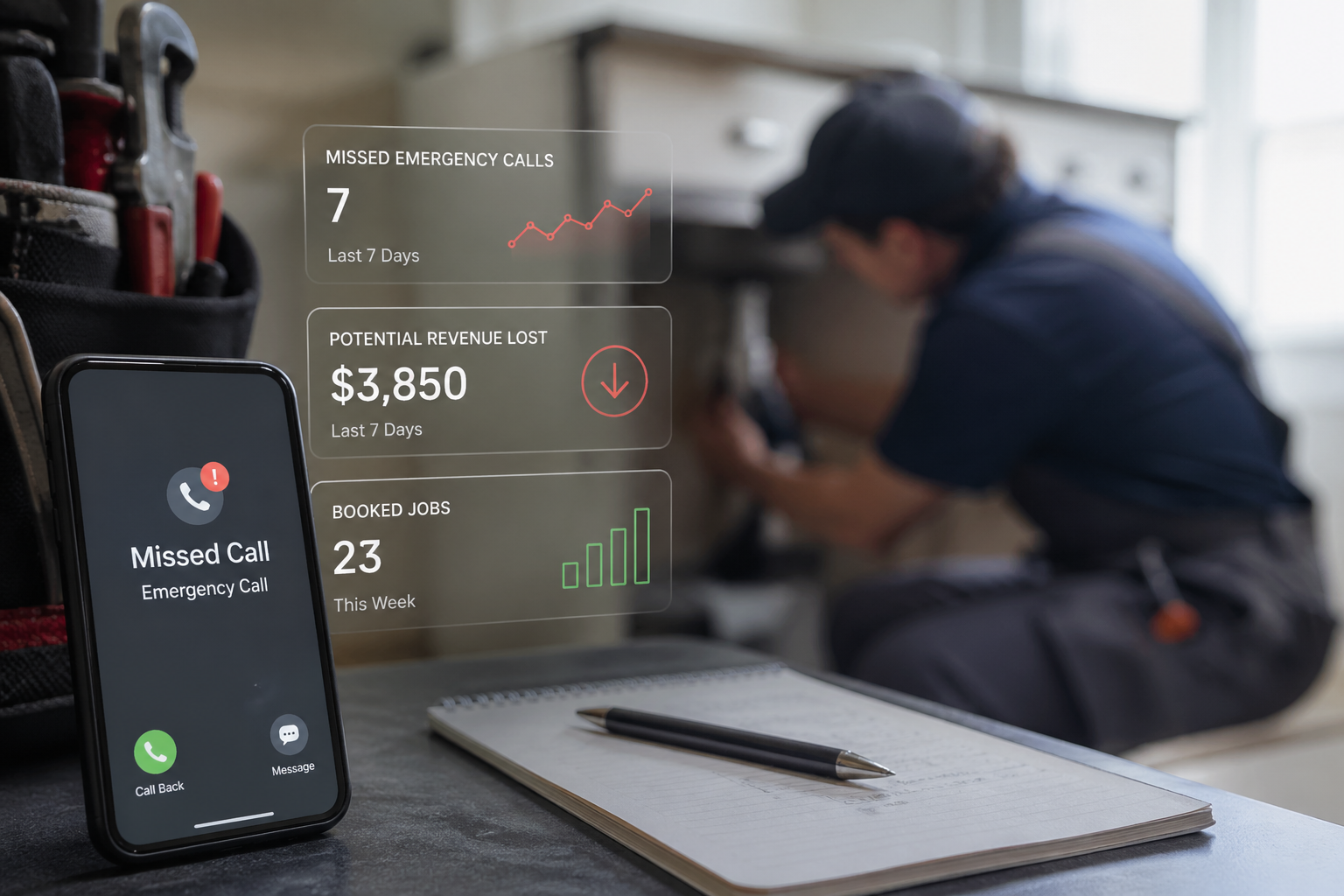
Most small businesses miss somewhere between 30% and 60% of inbound calls during business hours, and the percentage rises sharply outside them. A plumber on a roof. A lawyer in court. A salon owner running the chair. The phone rings, nobody picks up, and the caller (who usually needs the service now) calls the next number on Google.
The math gets painful fast. A missed plumbing emergency is a $400 to $4,000 job lost. A missed legal consult is a multi-thousand-dollar retainer that goes to a competitor. A missed dental new-patient call is a five-figure lifetime customer who never sees the inside of your office. The Hidden Cost of Missed Calls covers the per-vertical revenue math.
A full-time receptionist runs $35,000 to $50,000 a year with benefits. For a small business, that is rarely the right tradeoff. The phone needs to be answered. It does not need a salaried hire to do it.
What a Small Business AI Receptionist Actually Does
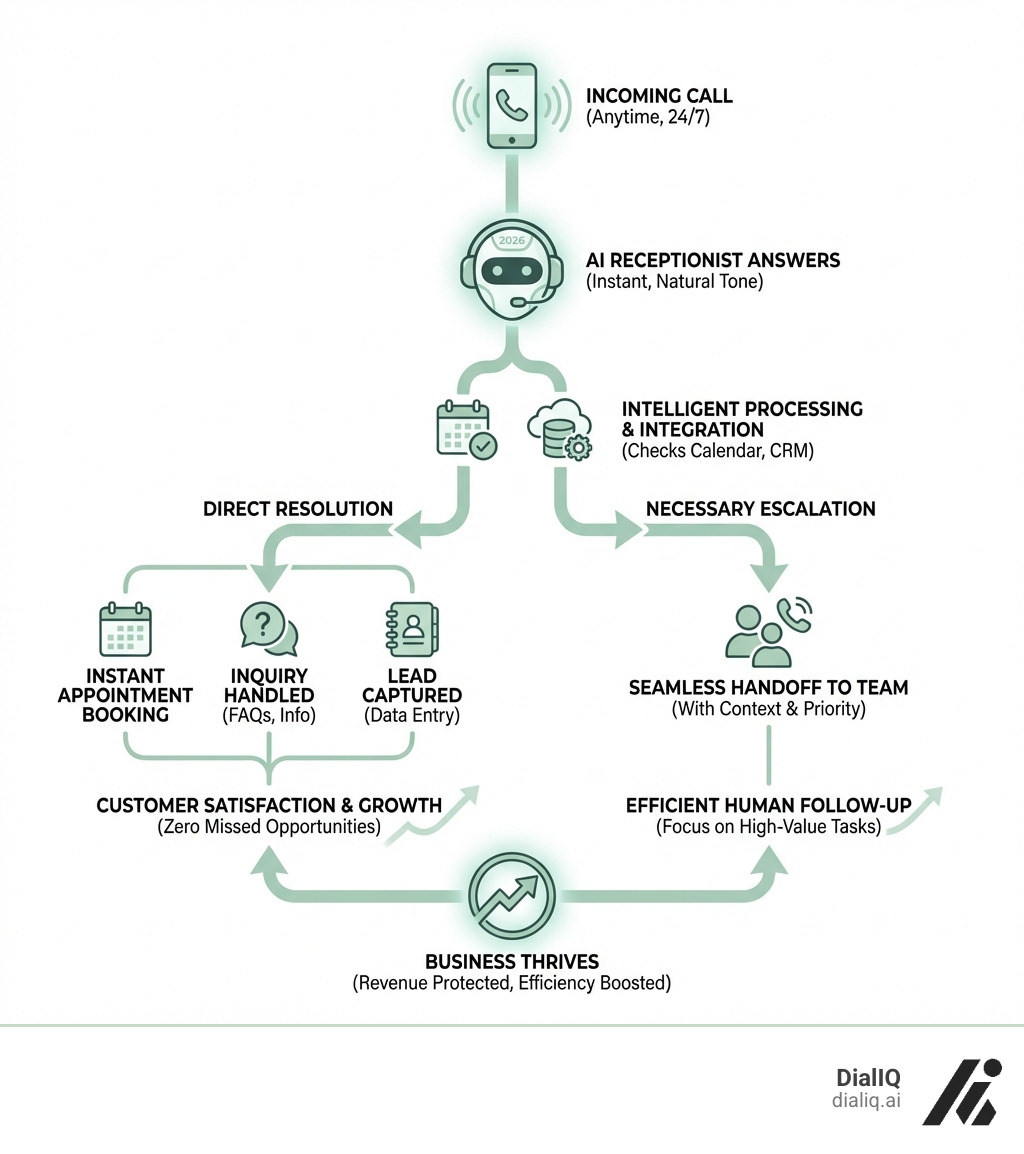
An AI receptionist is software that answers your phone the way a good receptionist would. It greets callers, identifies what they want, and either resolves the call or routes it to the right person. A modern small business answering service can do four things on a single call:
- Book appointments directly into your calendar (Google Calendar, Outlook, vertical-specific systems)
- Answer FAQs drawn from your website, pricing page, and business documentation
- Take detailed messages and email or text them to your team
- Hand off urgent calls to your on-call staff with full conversation context
What it does not do well: emotionally complex calls, calls that need legal or medical judgment, and calls where the caller specifically asks for a person. A well-configured AI phone answering service recognizes those moments and escalates, instead of forcing the caller through a frustrating loop. The AI Phone System vs IVR vs Live Answering Service comparison breaks down where each fits.
Who Benefits Most From a Small Business AI Receptionist
Almost any business that runs on inbound calls can use an ai answering service for small business. A few verticals see the most concentrated return:
- Home services (HVAC, plumbing, electrical, roofing): Emergency calls arrive at all hours, and the first business to answer usually books the job. A 2 AM water heater call is a $1,500 job that goes to whoever picks up first.
- Medical and dental practices: A new-patient call that hits voicemail rarely calls back. Same for prescription refills, appointment changes, and after-hours symptom triage. HIPAA compliance is non-negotiable here.
- Legal services: Personal injury, criminal defense, and family law all run on intake calls that come in at unpredictable hours. A qualified consult can be worth thousands in retainer; missing it goes straight to a competitor.
- Salons, spas, and wellness: Booking-heavy businesses lose appointments when nobody is at the desk. A small business answering service that books directly into your calendar pays for itself in recovered no-shows alone.
- Real estate: Hot leads call when they see a listing, often outside business hours. The agent who responds in five minutes wins; the one who calls back the next morning loses.
The common thread: businesses where missing a single call has high revenue impact, where the call volume is too unpredictable for a human receptionist to handle alone, or where after-hours coverage is the difference between booking the job and losing it.
The Cost: AI vs. Human Receptionist
A modern small business answering service costs less than half a day of a salaried receptionist's time, per month. Rough comparison:
- Full-time receptionist: $35,000 to $50,000 a year, plus benefits, sick days, and training
- Human-staffed answering service: $1.50 to $2.50 per minute, billed by the second
- AI receptionist: $50 to $300 a month, often with unlimited minutes
The pricing model matters as much as the headline rate. Per-minute billing punishes you for high call volumes, exactly when the service is most useful. Flat-rate plans with unlimited minutes are predictable and scale with your business instead of penalizing it. Ask any provider for the all-in cost at your expected call volume, not the starting rate.
For a side-by-side cost breakdown by call volume, see the AI Receptionist vs Human Receptionist Cost Comparison and the AI Call Handling Service Pricing Guide. Most small businesses break even after capturing one extra customer per month. After that, every additional booked call is profit.
Features That Actually Matter
Most AI receptionist for small business platforms have similar feature lists on their marketing pages. The real differences show up in three places.
Calendar and CRM integration. This is the feature that determines whether the AI is useful or just a fancy answering machine. Look for native integration with Google Calendar, Outlook, and your CRM (HubSpot, Salesforce, Zapier). The AI should book appointments directly, log every call, and sync caller details automatically, without manual data entry from your team. The step-by-step guide on automating appointment scheduling covers what to look for here.
Industry-specific knowledge. A legal intake call requires different questions than a plumbing dispatch. A medical appointment has HIPAA implications a salon booking does not. Look for providers who train the AI on your business documents, FAQs, and intake scripts. A generic AI answering service for small business asks generic questions and misses the nuance that costs you customers.
Call routing and escalation. A good AI knows when to hand off. Ask each provider: how does the system identify urgent calls? How does it route by intent (sales vs support vs existing customer)? Can it do warm transfers with a conversation summary, so your team is not starting cold?
Other features of an ai phone answering service that matter, in priority order: spam call filtering (saves more time than you think), multilingual support if your customer base needs it, custom voice and tone to match your brand, and after-hours-specific routing. The Best AI Call Handling Services for SMBs buyer's guide compares the major platforms feature by feature.
Setup, Security, and Industry Fit
Setting up an AI receptionist for small business takes 1 to 4 hours, not days. The basic flow:
- Connect your business phone number through call forwarding from your existing carrier
- Configure business hours, services, and FAQs
- Connect your calendar and CRM
- Test with a few real calls before going live
The AI Receptionist Implementation Checklist covers everything to prepare in advance.
Security and compliance: Healthcare practices need HIPAA compliance and a Business Associate Agreement. Legal and financial services need data encryption and clear data residency policies. Ask any provider for their compliance documentation before signing. This is one place where "we're working on it" is a hard no.
Industry fit: Some verticals have non-obvious requirements.
- Healthcare: HIPAA-compliant data handling, integration with EHR systems, careful triage language
- Home services: 24/7 emergency dispatch, integration with field service platforms (ServiceTitan, Housecall Pro)
- Legal: detailed intake forms, conflict-of-interest screening, urgency triage
- Real estate: lead qualification (buyer, seller, or renter), tour scheduling, after-hours-heavy traffic
Pick a provider with experience in your vertical. Generic AI receptionists work fine for simple use cases, but the difference shows up on complex calls.
Frequently Asked Questions
Will my customers know they are speaking to an AI?
Modern AI voices are good enough that most callers do not realize they are speaking to software. You can configure the AI to introduce itself transparently if you prefer, or have it operate naturally without disclosure. The more important question is whether it handles the caller's request well, and that comes down to configuration, not voice quality.
How many calls can an AI receptionist handle at once?
Unlimited. An AI receptionist handles thousands of simultaneous calls without a busy signal or hold queue. This matters most during marketing spikes, after-hours rushes, and seasonal busy periods, exactly when a single human receptionist or a small staffed answering service gets overwhelmed.
What happens if the AI cannot handle a call?
A well-configured AI escalates cleanly: warm transfer to a live person with conversation summary, detailed message capture sent via email or SMS, scheduled callback, or a self-service link texted to the caller. The AI typically handles 80 to 90% of routine calls and escalates the rest. The exact percentage depends on how well the AI is trained on your specific business.
How long until I see ROI?
Most small businesses break even within the first month if they are missing more than a handful of calls per week. The math is straightforward: one captured customer typically covers the entire monthly cost. Track answer rate, booked appointments, and after-hours leads in the first 30 days. For most small businesses, an AI receptionist for small business earns back its monthly cost on the first or second captured call.
Making the Decision
For most small businesses, the question is not whether to use an AI receptionist for small business, but how soon. Every week you wait, more calls go to voicemail and more customers go to competitors. The cost of trying one is low. Most providers offer 7 to 14 day trials with no card required.
DialIQ answers every call, books appointments into your calendar, and routes urgent ones to your team, for less than the cost of a part-time receptionist. See pricing or start a 14-day free trial. No credit card required.